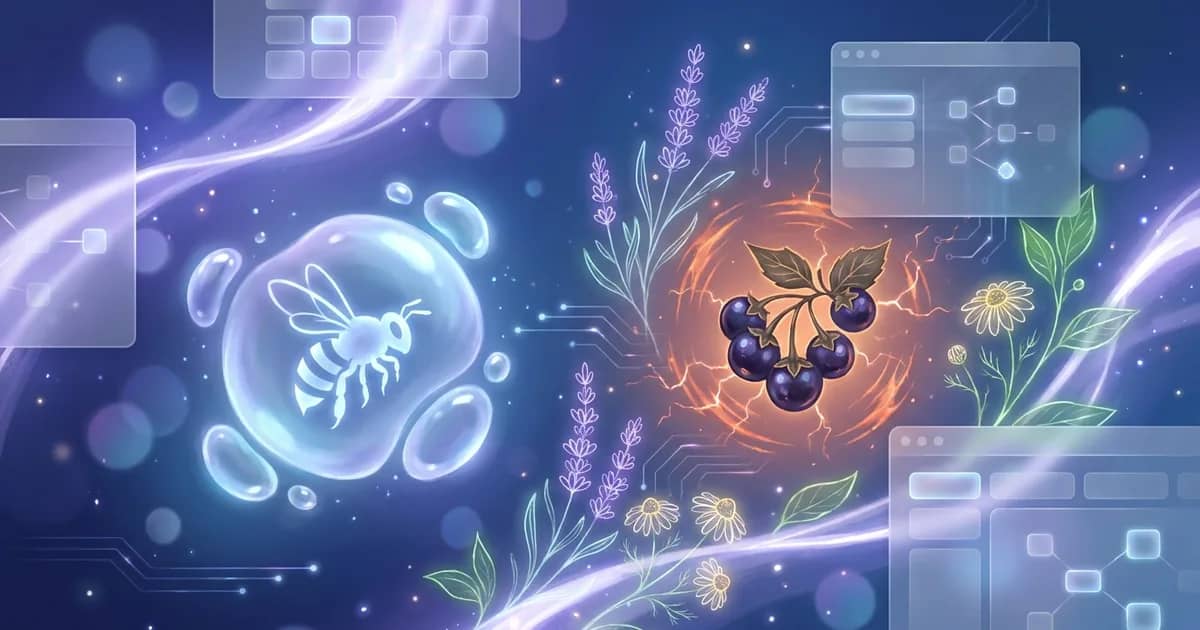
Острото възпаление постоянно поставя тези две лекарства в конкуренция: гореща, червена, подута част, внезапно начало, десностранна тенденция и следобедно влошаване подхождат както на Apis mellifica, така и на Belladonna. Разграничението не е фино, щом знаете къде да гледате. Apis се подува с течност и жили; Belladonna пулсира, гори и остава суха.
Това ръководство е написано за практици и студенти, които избират между тях в остър случай, а всеки отличителен белег по-долу е извлечен от Boericke's Materia Medica и Boger's Synoptic Key.
Apis срещу Belladonna накратко
| Apis mellifica | Belladonna | |
|---|---|---|
| Характер на отока | "Едем на кожата и лигавиците"; "внезапно подпухване на цялото тяло"; клепачи като водни торбички | Застой без излив; части "горещи, подути, червени и сухи" |
| Цвят | "Розовочервен оттенък"; лъскава подпухналост | "Ярко зачервяване"; гори алено, гладко |
| Болка | "Жилещо парене, бодежи, щипане, като горещи игли" | "Пулсиращи, остри режещи, стрелкащи или дращeщи болки; с побъркваща сила" |
| Начало / ход | "Бързо начало"; внезапен излив | "Внезапни, бурни ефекти"; болки, "идващи и отиващи, в повтарящи се пристъпи" |
| Жажда | "Следобедно втрисане, с жажда" | "Няма жажда при треска"; отвращение към вода |
| Кожа / топлина | Непоносимост към топлина; едематозна, болезнена, чувствителна | "Пареща, остра, изпаряваща се горещина", с ледено студени стъпала |
| Влошаване | Топлина във всякаква форма, допир, натиск, след сън, 16 ч., затворени отоплени стаи | Слънчева топлина, 15 ч., течение върху главата, светлина, шум, разтърсване, допир, движение |
| Подобрение | "На открит въздух, при разкриване и студено измиване" | "Леко покриване", "извиване назад", покой в леглото |
| Ум | "Ревнив, неспокоен, труден за угаждане"; "внезапни пискливи, пронизителни писъци"; апатия | "Яростен; беснее, хапе, удря; желание да избяга"; халюцинации |
| Страна | Дясна; отдясно наляво | Дясна |
Едем срещу застой — локалният признак
Единственото най-полезно наблюдение е дали възпалената част задържа течност.
Apis е лекарството на едема. Boericke започва статията, като казва, че то "действа върху клетъчните тъкани, причинявайки едем на кожата и лигавиците", а водещите симптоми са "подуване или подпухване на различни части, едем, розовочервен оттенък, жилещи болки, болезненост, непоносимост към топлина и най-лек допир, и следобедно влошаване." Стенографията на Boger е "подпухналост, лъскаво зачервяване" с клепачи или устни като "водни торбички." Аналогията с ужилване от пчела е точна: надигнат, лъскав, изпълнен с течност оток, който жили и не понася да бъде докосван или затоплян.
Belladonna е лекарството на сухия застой. Нейното възпаление е артериално, а не серозно — главните думи на Boger гласят "сухота, ярко зачервяване" и "пареща горещина; с голяма болка; пълнота или подуване", и той отбелязва "застой: към главата. Разширени артерии." Картината на Boericke е познатата: "гореща, червена кожа, зачервено лице, блестящи очи, пулсиращи каротиди." Кожата е "суха и гореща; подута, чувствителна; гори алено, гладко." Там, където Apis е мек и воднист, Belladonna е опъната и излъчваща топлина.
Практичен тест край леглото: натиснете подутата част. Apis хлътва, лъщи и жили; Belladonna пулсира срещу пръста и се влошава от натиска.
Болката — жилене срещу пулсиране
И двете лекарства дават болка, достатъчно силна, за да доминира случая, но усещането е диагностично.
Apis жили. Фразата на Boger — "жилещо парене, бодежи, щипане, като горещи игли" — е най-ясното описание, а Boericke повтаря жиленето като кардинално локално усещане, с "остро жилещо парене или натъртена болезненост" на мозъка, корема, яйчниците или пикочния мехур. Болката е придружена от болезненост и непоносимост към допир, толкова пълна, че Boger записва влошаване от "допир, дори на косата."
Belladonna пулсира и удря. Болките са "пулсиращи, остри режещи, стрелкащи или дращeщи", с "побъркваща сила", и — решаващо — те идват и си отиват в повтарящи се пристъпи, вместо да продължават равномерно. Формулировката на Boericke е "невралгични болки, които идват и си отиват внезапно." Главата е класическото място: "пулсираща глава", най-зле в слепоочията и влошена от движение, с "удрящо пулсиране" и усещането, че мозъкът "се издига и спада на вълни."
Внезапната поява и изчезване на болката е подпис на Belladonna. Постоянната жилеща болезненост, която не ви позволява да се приближите до частта, е Apis.
Жажда, топлина и модалности
Тук двете лекарства са достатъчно близки, за да заблудят невнимателния — и след това решително се разделят.
Обща основа. И двете се влошават от топлина, и двете се влошават от допир, и двете се влошават следобед (Apis в 16 ч., Belladonna в 15 ч.), и двете действат предимно от дясната страна. Нито едно от тези не решава предписанието.
Къде се разделят.
- Облекчение от студ. Apis активно го иска: "по-добре, на открит въздух, при разкриване и студено измиване." Belladonna не — тя иска "леко покриване" и покой в леглото, и е изразено по-зле от "течение; върху главата", от подстригване и от миене на главата.
- Жажда. Boericke записва треската на Belladonna с "няма жажда при треска" и обща "сухота на устата и гърлото с отвращение към вода." Разделът за треска при Apis дава "следобедно втрисане, с жажда."
- Положение. Belladonna е по-добре при "извиване назад" и, в модалностите на Boericke, "полуизправено". Apis "трябва да легне" в обобщението на Boger.
- След сън. Apis характерно се влошава след сън — малък, надежден потвърждаващ признак без съответствие при Belladonna.
Психичното състояние
Когато локалната картина е неясна, умът я разрешава, защото тези две състояния едва ли биха могли да бъдат по-различни.
Belladonna е бурна. Пациентът "живее в свой собствен свят, погълнат от призраци и видения и забравил околните реалности", с халюцинации — "вижда чудовища, отвратителни лица" — и делириум, който е "яростен; беснее, хапе, удря; желание да избяга." Boger добавя "див делириум; свиреп, шумен, вика" и "хапеща мания." Сетивата са болезнено изострени: светлина, шум и разтърсване са непоносими.
Apis е раздразнителен. Характеристиката на Boger е "детински. Раздразнителен, възбудим, ревнив, претенциозен и неспокоен или апатичен", а тази на Boericke е "ревнив, неспокоен, труден за угаждане." Драматичният психичен симптом на лекарството не е ярост, а "внезапни пискливи, пронизителни писъци" — cri encéphalique на страдащо дете — и в по-дълбоки състояния "апатия, безразличие и безсъзнание", като пациентът е "непохватен; лесно изпуска неща."
И двете лекарства въртят главата върху възглавницата, така че този общ признак сам по себе си не доказва нищо.
Реперторизиране на избора
Кръстосайте локалната рубрика с общите симптоми, които разделят двойката, вместо да реперторизирате патологията:
- Общи; ПОДУВАНЕ; едематозно — Apis
- Кожа; ЖИЛЕЩИ болки — Apis
- Общи; ТОПЛИНА; приливи на; със застой — Belladonna
- Глава; БОЛКА; пулсираща — Belladonna във висока степен
- Стомах; БЕЗ ЖАЖДА; по време на треска — Belladonna
- Общи; СТУД; къпане; подобрява — Apis
- Общи; РАЗКРИВАНЕ; подобрява — Apis
- Глава; БОЛКА; от течение — Belladonna
- Общи; СЪН; след; влошава — Apis
- Ум; ДЕЛИРИУМ; яростен, беснеещ — Belladonna
- Ум; РЕВНОСТ — Apis
- Ум; ПИЩЕНЕ; по време на сън — Apis
Задълбочаване на изучаването
За пълните картини вижте ръководството за лекарството Apis mellifica и ръководството за Belladonna; и двете са сред основните полихрести, с които всеки студент се среща рано. Когато остър случай не може да се реши между двама кандидати, дисциплината в ръководството за реперторизация стъпка по стъпка — степенуване и покритие, а не суров брой — е това, което го решава.
Прочетете пълните класически статии: Apis при Boericke и Apis при Clarke, заедно с Belladonna при Boericke и Belladonna при Clarke — безплатно в Similia, където можете да търсите рубриките, които ги разделят в същата сесия.