
In short: This comparison covers Similia, RadarOpus, Complete Dynamics, Hompath Zomeo and Vithoulkas Compass. Similia offers a classical library and AI semantic search on Free, with three new cases and three analyses a month; its AI toolkit and unlimited cases and analyses require Pro. The other products differ in their source catalogues, installation requirements and analysis tools.
For practitioners and students, choosing software starts with the repertories you need, how you record a case and which devices you use. A larger library or an AI feature does not establish better prescribing or patient outcomes.
How this comparison was researched — 6 September 2026. Similia publishes this guide. We reviewed public product, download and trial descriptions from radaropus.com, hompath.com, vithoulkascompass.com and completedynamics.com, and checked Similia's current product and plan limits. We compared source coverage, access model, case workflow and advertised analysis features. We did not purchase competitor licences, run matched cases in their products, benchmark speed or accuracy, or audit security. Screenshots illustrate the products; they are not evidence of a current hands-on test. Package contents and checkout prices need confirmation for the exact edition and country.
1. Similia – Browser Library and AI Toolkit
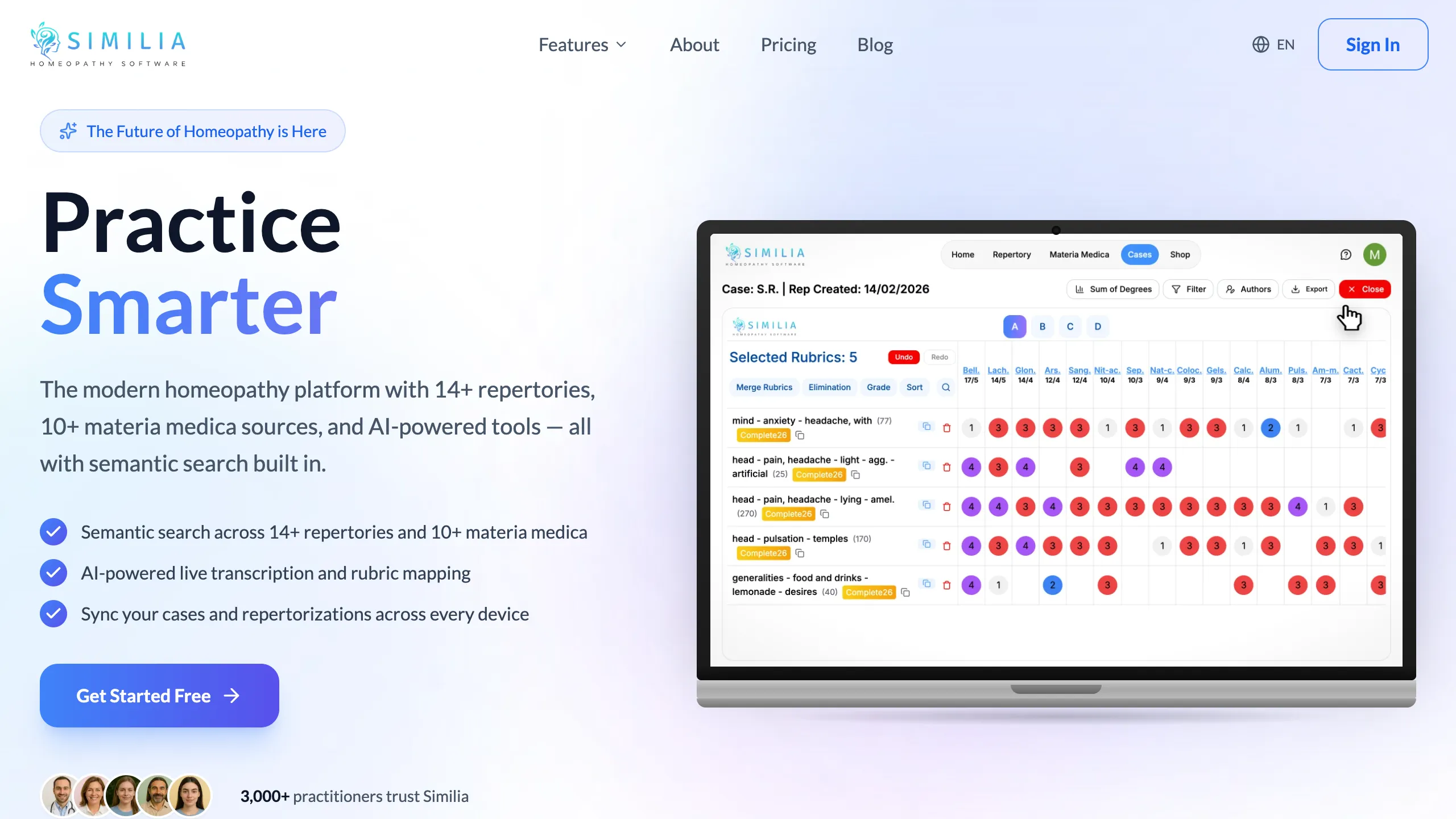
Similia combines repertory and materia medica reading, semantic search and case records in the browser. Free includes the classical reference collection; Pro adds the AI toolkit and access to premium sources according to the selected edition or add-on.
Key Features:
- 7 classical repertories and 21 classic materia medica books on Free
- AI semantic repertory search on Free; materia medica semantic search requires access to eligible paid sources
- Basic cloud case management on Free, capped at 3 new cases and 3 analyses per month
- 7 premium repertories available across the Pro editions
- The Pro AI toolkit: Notes-to-Rubric, AI Case Analysis, live audio transcription, and AI Photo Analysis
- Unlimited cases and analyses on Pro, with cross-device sync on every tier
Workflow and limits: Similia's semantic search accepts natural-language descriptions and returns repertory or materia medica matches for review. The Pro AI toolkit adds transcription, Notes-to-Rubric, case analysis and photo analysis. Suggested rubrics and interpretations still need checking against their sources. This comparison does not establish a compliance status or quantify time saved.
Best For: Classical homeopaths, students, and practitioners seeking a modern interface accessible anywhere on any device. Free gives learners 7 classical repertories, 21 classic materia medica books, AI semantic search, and basic case management capped at 3 new cases and 3 analyses per month. Pro unlocks the four-feature AI toolkit, unlimited cases and analyses, and premium repertories like Murphy's MetaRepertory and Complete Repertory 2026.
2. RadarOpus – Installed Reference Library
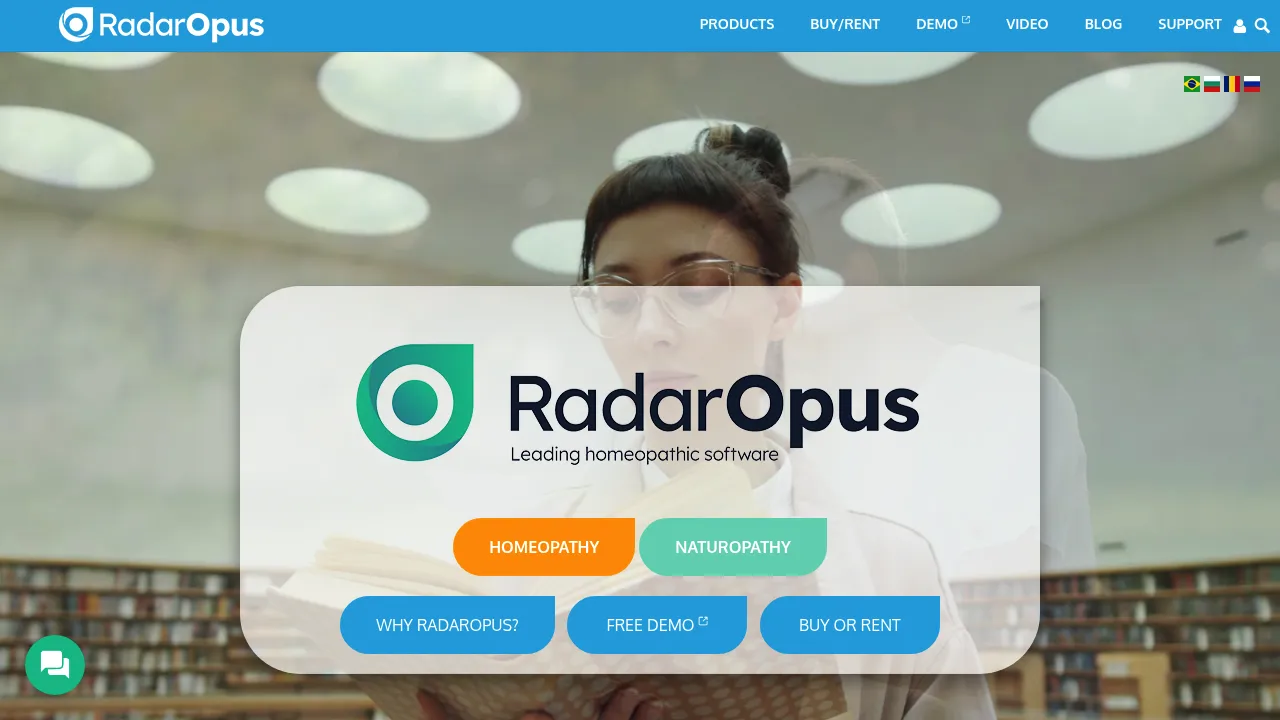
RadarOpus combines a licensed reference catalogue with repertory analysis and patient management in an installed Mac or Windows program. Its public site lists Synthesis, additional repertories and materia medica, with contents depending on the purchased package (source: radaropus.com, 6 September 2026).
Key Features:
- Licensed repertories, including the Synthesis Repertory
- Materia medica, journals and other reference documents
- Patient management system
- Optional analysis modules
- Desktop software; the vendor also lists the separate Opus Go mobile product
Workflow and limits: The purchasing question is which repertories, books and modules a package includes, and what the installation and device licence permits. Its homepage also advertises an AI module; this review did not test that module's integration or capabilities. Do not infer desktop-to-mobile content parity from the presence of a separate mobile product.
3. Hompath Zomeo – Desktop Suite and Separate Mobile Products
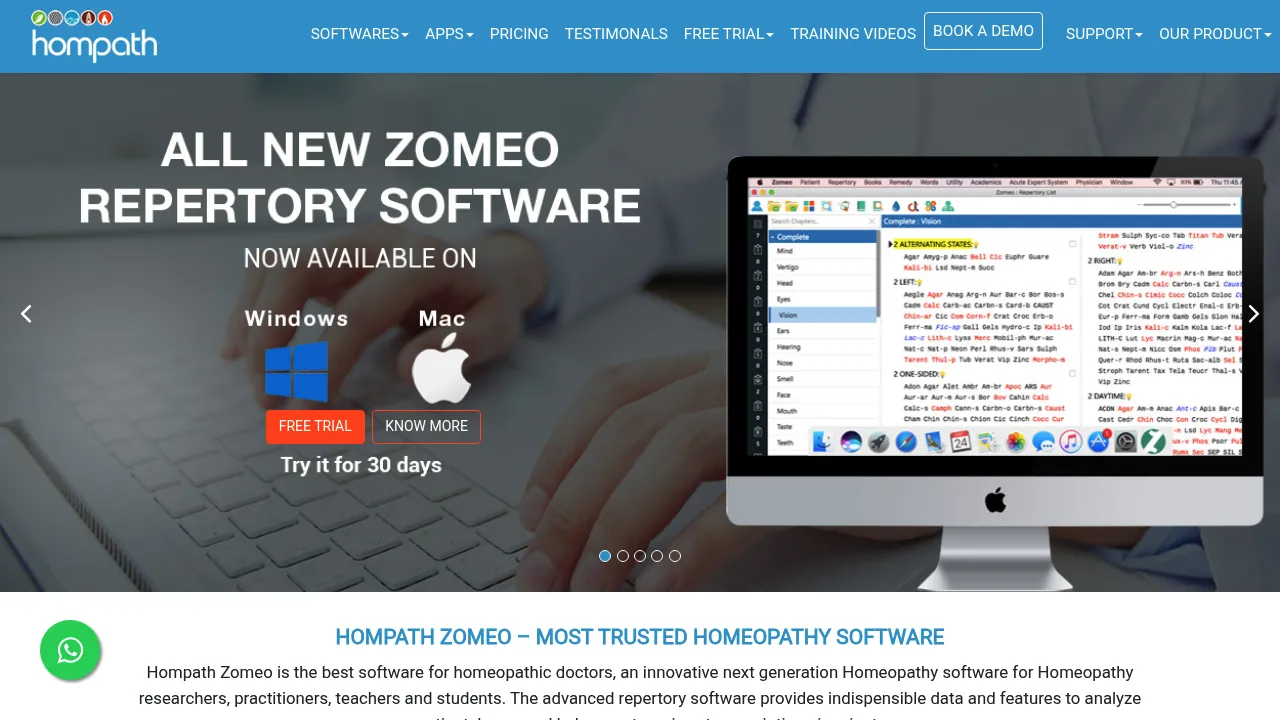
Hompath describes Zomeo as a repertory, library and case-record suite with expert systems. Its homepage separately lists the Firefly mobile app, with a smaller stated library (source: hompath.com, 6 September 2026).
Key Features:
- Complete Repertory and other repertories; verify the edition and package
- Vendor-reported library of 1,300 book volumes, not necessarily 1,300 distinct materia medica works
- Repertory search, case records and expert systems
- Separate mobile offering: Firefly for iPhone, iPad and Android
Workflow and limits: The public homepage contains inconsistent repertory counts and references Complete Repertory 2024. We did not verify the currently supplied edition. It lists 10 repertories and 107+ book volumes for Firefly, so the desktop library should not be described as fully available on a phone without checking the mobile package. Confirm case transfer and licence terms separately.
For a deeper look at pricing tiers, expert systems, and where Zomeo's library depth matters most, see our Hompath Zomeo vs Similia comparison.
4. VithoulkasCompass – Expert System for Case Analysis
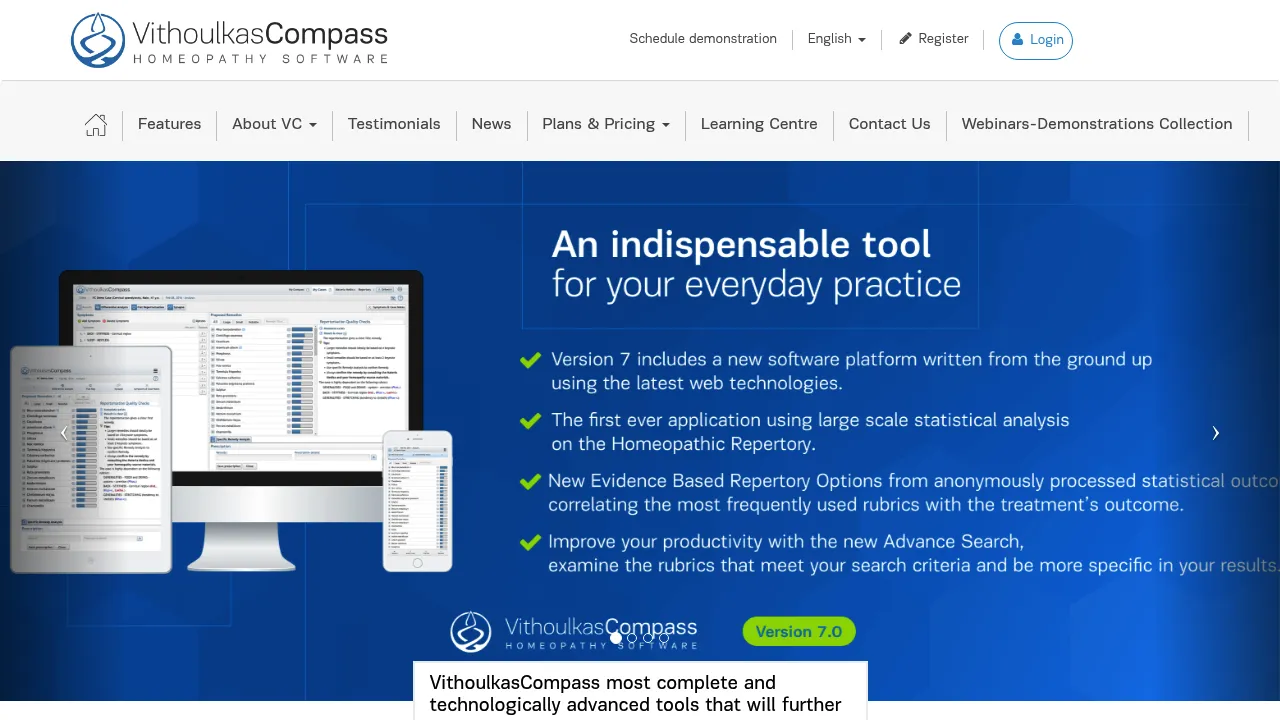
VithoulkasCompass is web-based software with a Differentiation Expert System and a questioning workflow for exploring remedy differences (source: vithoulkascompass.com, 6 September 2026).
Key Features:
- Expert system for guided case analysis
- Suggests specific remedy questions based on your inputs
- Synapse workflow for selecting rubrics during questioning
- Browser access on computers, tablets and phones
Workflow and limits: Its published workflow suggests questions to distinguish candidate remedies. That is a different task from transcribing a consultation or extracting rubrics from notes. This review did not test its recommendations or substantiate the vendor's clinical-outcome claims. Its public site advertises a seven-day trial; subscription access should not be confused with an ongoing free library.
For a side-by-side breakdown of the Differentiation Expert System vs general-purpose AI tools, see our Vithoulkas Compass vs Similia comparison.
5. Complete Dynamics – Complete Repertory and Native Editions
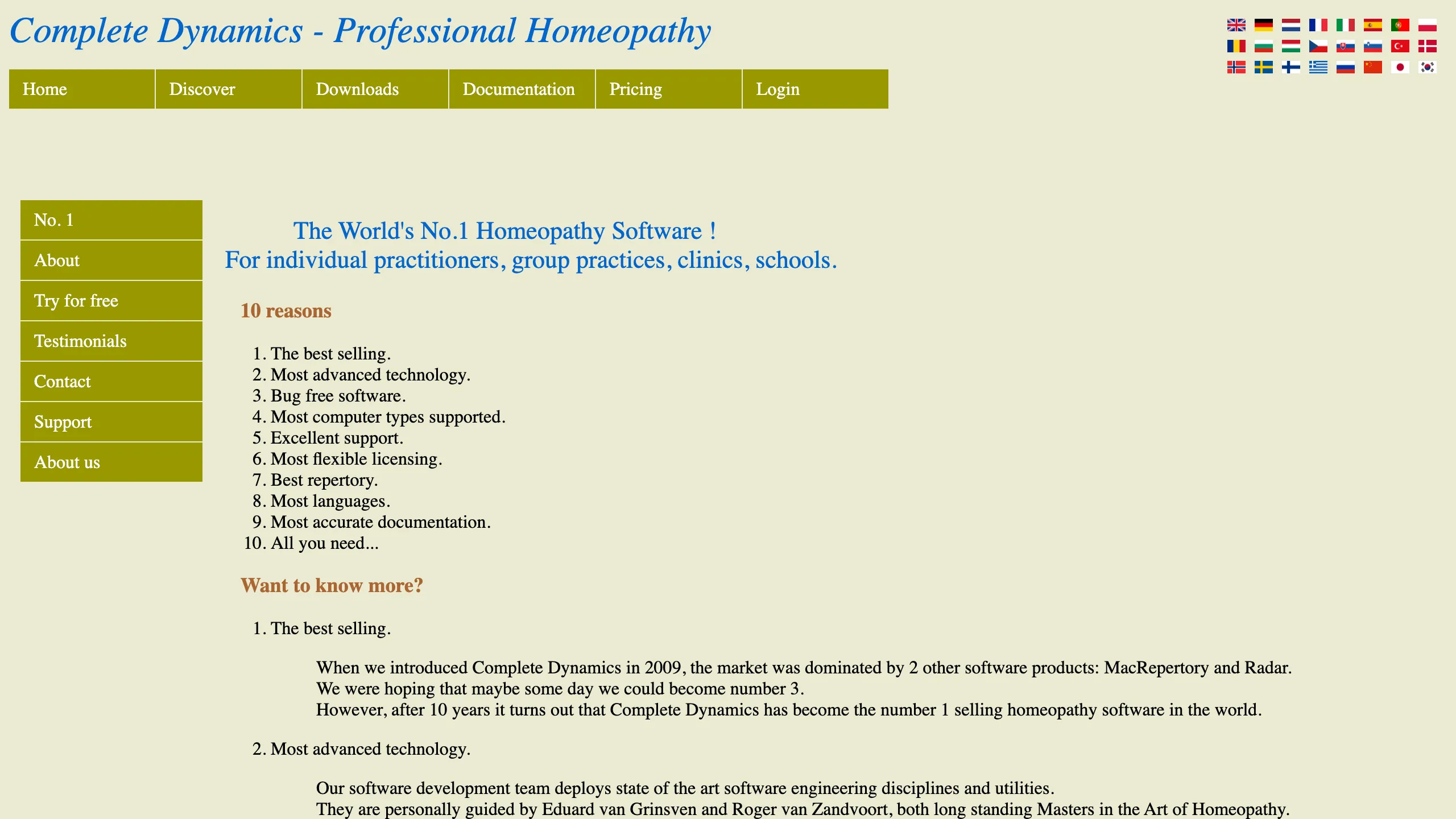
Complete Dynamics centres on the Complete Repertory, with Browser, Practitioner and Master editions. Its download and trial pages make the delivery model clear: Browser Edition is installed native software, despite its name (source: completedynamics.com, 6 September 2026).
Key Features:
- Free Browser Edition for repertory search and browsing
- Paid Practitioner and Master editions for case analysis and additional tools
- Native downloads for macOS, Windows and Linux; separate mobile availability
- A 30-day trial described for the downloaded program; the iOS download page explicitly excludes a free trial
Workflow and limits: After the program's trial, the vendor permits continued use of Browser Edition without a paid licence. That retains repertory browsing, not the paid case-analysis feature set. Compare this with Similia Free's seven classical repertories, 21 classic materia medica books, AI semantic search and allowance of three new cases and three analyses a month.
For edition details and the difference between repertory browsing and case analysis, see the Complete Dynamics vs Similia comparison.
How to Choose the Best Homeopathic Software for Your Practice
When selecting homeopathic software, consider these key factors:
1. Repertory & Materia Medica Content The breadth and quality of repertories and materia medica are fundamental. If you primarily use Kent and Boenninghausen, ensure they're well-represented. If you need access to Complete Repertory or Murphy's MetaRepertory, verify availability and accuracy. For an in-depth comparison, see our guide to Murphy's vs Kent's vs Complete Repertory.
2. Search & Repertorization Speed Try the same symptom descriptions in keyword and semantic search, then inspect the matched rubrics and source passages. Record whether the matches are useful before treating a speed claim as an advantage.
3. Workflow Integration List the tasks you need: consultation notes, prescriptions, follow-ups, scheduling, reminders and billing. Similia's case management covers the case timeline; it does not replace appointment scheduling or patient messaging.
4. Platform & Accessibility Cloud-based platforms offer cross-device access and automatic updates, whilst desktop software may provide offline functionality. Mobile apps are invaluable for practitioners who repertorise during consultations.
5. AI & Modern Features Compare AI features by task: semantic search, Notes-to-Rubric, AI case analysis, live transcription and photo analysis. In Similia, semantic search is included on Free; the other four require Pro. Check source attribution and how you can correct a suggestion, using the AI and remedy-selection guide.
6. Budget & Pricing Model Free tiers can provide excellent value for students and practitioners starting out. Similia's free forever plan includes 7 classical repertories, 21 classic materia medica books, AI semantic search, and basic case management capped at 3 new cases and 3 analyses per month. Paid subscriptions typically unlock premium repertories, unlimited cases and analyses, and advanced features. Desktop software often requires larger upfront investments.
Choosing a starting point
Choose the required repertories and workflow before comparing subscription totals. Installed libraries, browser reference tools and expert systems may solve different parts of the same practice workflow. This desk review establishes published features and limitations, not a ranked performance winner.
Start with Similia Free for seven classical repertories, 21 classic materia medica books, AI semantic search, three new cases and three analyses a month. Pro adds the AI toolkit and unlimited cases and analyses; premium source availability depends on the edition and add-ons.
If you're new to repertorisation, read the beginner's guide. Dedicated comparisons also cover OpenRep, Miccant Vision, Miccant / ISIS and Mercurius.