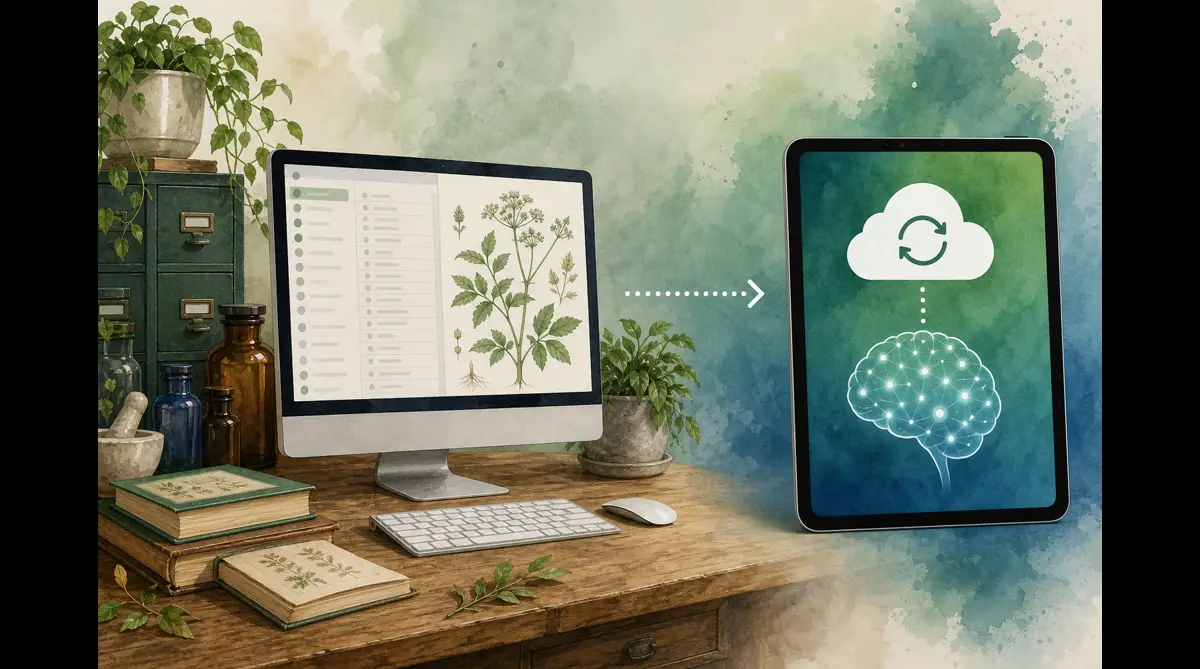

La mayor parte del "software clínico" está construido alrededor de la agenda de citas. Una práctica homeopática está construida alrededor del caso — y esa diferencia es toda la especificación. Lo que un homeópata necesita del software no son códigos de facturación, sino un registro fiel de la consulta, una ruta rápida desde ese registro hacia el repertorio, una materia médica lo bastante cercana como para comprobar los candidatos frente al paciente y no solo desde la memoria, un historial de prescripción claro, y seguimientos que puedan juzgarse frente a la totalidad original en lugar de frente a un recuerdo vago de ella. Este artículo recorre ese flujo de trabajo etapa por etapa — admisión, toma del caso, repertorización, verificación, prescripción, seguimiento — y muestra qué debería hacer un software para clínica homeopática especializado en cada paso. Como siempre en este blog, está escrito para profesionales y estudiantes; el juicio clínico en cada paso sigue siendo tuyo. (Y para decirlo claramente desde el principio: Similia deliberadamente no gestiona programación de citas ni facturación — el caso a favor de ese enfoque forma parte del argumento que sigue.)
El ciclo que define la práctica homeopática
Reduce cualquier consulta homeopática a su esqueleto y aparece el mismo ciclo:
- Tomar el caso — la narración del paciente, en sus palabras, más tus observaciones.
- Analizar — traducir los rasgos llamativos en rúbricas y repertorizar.
- Verificar — leer los candidatos principales en la materia médica frente al paciente vivo.
- Prescribir y registrar — la decisión del remedio y su razonamiento.
- Hacer seguimiento — reevaluar frente al cuadro original; continuar, esperar o volver a analizar.
Cada etapa produce información que la siguiente necesita, y el seguimiento necesita todo ello. El papel maneja este ciclo con archivadores y una disciplina heroica; los sistemas genéricos de consulta manejan las etapas 1 y 4 como texto libre y son estructuralmente ciegos al resto. El caso a favor de un software clínico específico para homeopatía es simplemente que el ciclo debería vivir en un solo lugar, sin volver a teclear nada y sin perder nada entre etapas. Ese es el encargo de diseño sobre el que está construido Similia, y las etapas siguientes sirven también como lista de comprobación con la que puedes evaluar cualquier software — el nuestro incluido.
Etapa 1 — Admisión y registro del caso
La unidad de trabajo es el caso del paciente: identidad y datos de contacto, el cuadro de presentación, antecedentes y cada consulta posterior, en un único registro cronológico. Dos propiedades importan más que cualquier lista de funciones.
El registro debe dar prioridad a la narración. La toma del caso homeopático depende del propio lenguaje del paciente — las frases de "como si", la modalidad extraña, el énfasis — porque eso es precisamente lo que más tarde se convierte en selección de rúbricas. Por tanto, el software debería hacer que tomar notas largas y literales sea sencillo, en lugar de forzar la historia dentro de campos estructurados. En Similia, un caso contiene notas de consulta libres junto a elementos estructurados (prescripciones, repertorizaciones, documentos e imágenes), de modo que la narración sigue siendo primaria y la estructura se une a ella; nuestra guía de toma del caso cubre el oficio en sí.
El registro debe ser un solo registro. Visita a domicilio desde el teléfono, trabajo de escritorio en el portátil, lectura en la tableta — el caso debe ser idéntico en todas partes, sin exportaciones ni rituales de sincronización. El software en la nube se gana aquí su lugar: inicia sesión en cualquier sitio y la consulta está presente, actualizada y completa.
Etapa 2 — Toma del caso, con los ojos en el paciente
El dilema clásico de la toma moderna del caso es la atención: cuanto más fielmente escribes, menos observas. Dos capacidades disuelven la mayor parte del problema.
Transcripción en directo. El modo de audio en directo de Similia graba la consulta (con el consentimiento informado del paciente — siempre) y la transcribe en tiempo real dentro del caso. Mantienes el contacto visual; la narración literal sigue quedando en las notas. Para las medias frases rápidas que contienen síntomas guía — "es como si una mano lo apretara", "mejor en cuanto estalla una tormenta" — una transcripción es simplemente más fiel que cualquier resumen escrito después.
Sugerencias que siguen bajo control. A medida que se captura la consulta, la IA puede proponer rúbricas que coincidan con lo dicho, cada una trazable hasta su ubicación repertorial y su grado. El verbo importa: proponer. Tú confirmas, afinas o descartas; nada entra en el análisis sin el profesional. Esa división del trabajo — el software recupera, el homeópata decide — es el estándar que defendemos en todos nuestros textos sobre IA, y es exactamente donde el software clínico gana confianza o la pierde.
Etapa 3 — De la narración a la repertorización, sin volver a teclear
Aquí es donde un sistema integrado deja de ser una comodidad y empieza a cambiar la calidad del trabajo. Los síntomas llamativos identificados en las notas necesitan convertirse en rúbricas — y la fricción de ese paso, en términos de software, decide si consideras tres rúbricas candidatas u ocho.
En un flujo de trabajo conectado: busca en lenguaje cotidiano y deja que la búsqueda semántica mapee la formulación a la redacción clásica de las rúbricas en 14 repertorios (Kent, Murphy, el Complete Repertory, Boenninghausen y más), compara cómo cada repertorio formula y gradúa el síntoma, añade las rúbricas elegidas a la repertorización del caso y asígnales peso. La cuadrícula ordena los candidatos; el análisis se guarda en el caso, de modo que seis meses después la consulta de seguimiento pueda reabrirlo y ver exactamente qué rúbricas guiaron la prescripción.
Dos disciplinas mantienen honesta esta etapa — ambas antiguas, ambas más fáciles de sostener con software que contra él. Primero, pocas rúbricas bien elegidas superan a las listas largas; la guía para principiantes sobre repertorización explica por qué. Segundo, la repertorización propone — la decisión espera a la materia médica.
Etapa 4 — Verificación en la materia médica
Ningún homeópata experimentado prescribe desde una cuadrícula. La lista corta vuelve a las fuentes: leer los cuadros de los remedios — Boericke, Clarke, Allen, Hering, Kent — frente al paciente que tienes delante, y dejar que la gestalt decida entre candidatos aritméticamente similares.
El trabajo del software clínico es hacer que esa lectura no tenga fricción justo en el momento en que compite con el tiempo de consulta: cada remedio de la cuadrícula a un clic de sus entradas de materia médica, en la misma ventana que el caso, con búsqueda entre fuentes. Cuando la verificación cuesta treinta segundos en lugar de una visita a la estantería, realmente ocurre — también en días ocupados, que es cuando más importa.
Etapa 5 — Prescripción y memoria de la consulta
El registro de prescripción cierra la consulta: remedio, potencia, fecha y el razonamiento mientras aún está fresco — una línea sobre lo que decidió el caso es oro en el seguimiento. En Similia, las prescripciones viven como entradas estructuradas en el historial del caso, de modo que la consulta acumula una memoria consultable de qué se dio y cuándo, en lugar de un cajón de fichas. (Lo que el registro deliberadamente no hace es instruir: la dosificación y la repetición son decisiones clínicas que pertenecen a tu formación y criterio, no a valores predeterminados del software.)
Etapa 6 — Seguimiento frente a la totalidad original
El seguimiento es donde los registros integrados devuelven todo lo invertido. La pregunta a las cuatro o seis semanas nunca es solo "¿mejor o peor?", sino "¿qué ocurrió con los síntomas que guiaron la prescripción?" — y responderla honestamente requiere el cuadro original, sin que la memoria lo haya difuminado.
Con el ciclo en un solo lugar, la consulta de seguimiento tiene la narración de la primera visita, las rúbricas exactas y sus pesos, el orden de la repertorización, la prescripción y su justificación — todo abierto junto a las notas de hoy. La evaluación se convierte en comparación en lugar de reconstrucción: cuáles de los síntomas guía se movieron, qué es nuevo, si el caso necesita esperar, repetir el análisis sobre una totalidad cambiada o una nueva mirada en las fuentes. Cada seguimiento se añade al mismo caso, y el registro se convierte en la historia longitudinal que la prescripción crónica realmente necesita.
Lo que este software deliberadamente no hace
Un alcance honesto forma parte de la especificación. Similia no gestiona reservas de citas, facturación ni contabilidad. Esos son problemas comoditizados, ya bien resueltos por herramientas generales que la mayoría de las consultas usan de todos modos — y cada hora que un proveedor de homeopatía dedica a reconstruir un calendario es una hora que no dedica a la calidad del repertorio, la cobertura de la materia médica o el análisis. El conjunto práctico que vemos más a menudo en la clínica es agradablemente simple: una herramienta de reservas/calendario de tu elección, software contable ordinario y Similia para todo lo que ocurre una vez que el paciente está en la consulta. El software que se centra en el caso hace el trabajo clínico de la consulta; la capa administrativa permanece modular alrededor de él. (Nuestro resumen de herramientas digitales en la práctica sitúa todo el conjunto.)
La protección de datos es una función clínica
Los casos de pacientes están entre los registros más sensibles que puede tener cualquier consulta, y en un caso homeopático — donde la narración es el dato — confidencialidad e integridad son el mismo problema. Cualquiera que sea el software que elijas, las preguntas son: cifrado en tránsito y en reposo; aislamiento estricto de casos por cuenta; una base legal y condiciones de tratamiento de datos compatibles con el GDPR; tu capacidad de exportar y eliminar; y gestión del consentimiento para grabaciones. Similia está construido para operar bajo el GDPR con datos de pacientes cifrados, y nuestra guía de HIPAA y GDPR para la práctica homeopática recorre la parte de esas obligaciones que corresponde al profesional — redacción del consentimiento, conservación, derechos del paciente — que ningún proveedor puede cumplir por ti.
También hay un argumento de resiliencia que merece palabras claras: las consultas pierden portátiles. Una base de datos local de pacientes en una sola máquina está a un robo, derrame o fallo de disco de desaparecer; los registros en la nube sobreviven al hardware y te encuentran en el siguiente dispositivo. Eso no es marketing — es la razón actuarial, aburrida, por la que el software clínico en la nube se convirtió en la norma en el resto de la medicina.
La lista de comprobación
Evalúa cualquier software para clínica homeopática — el nuestro incluido — frente al ciclo:
| Etapa | El software debe… |
|---|---|
| Admisión | Mantener un único registro de caso centrado en la narración, idéntico en todos los dispositivos |
| Toma del caso | Capturar literalmente (por escritura o transcripción consentida) sin robar atención |
| Análisis | Pasar de las palabras del paciente a las rúbricas sin volver a teclear; múltiples repertorios, grados visibles |
| Verificación | Poner la materia médica a un clic de la cuadrícula, en la misma ventana que el caso |
| Prescripción | Registrar remedio, potencia y razonamiento como historial estructurado |
| Seguimiento | Reabrir el análisis original junto a las notas de hoy |
| Alcance | Hacer el ciclo clínico en profundidad, no la administración de forma superficial |
| Datos | Cifrar, aislar, cumplir, exportar — y sobrevivir a un portátil robado |
El plan gratuito de Similia cubre el núcleo funcional de este ciclo — casos, notas, repertorización en los repertorios incluidos, la biblioteca clásica de materia médica y búsqueda semántica — de modo que la forma honesta de evaluar el argumento anterior es simplemente pasar un caso real (anonimizado) por él, desde la admisión hasta el seguimiento, y ver si el ciclo se sostiene.