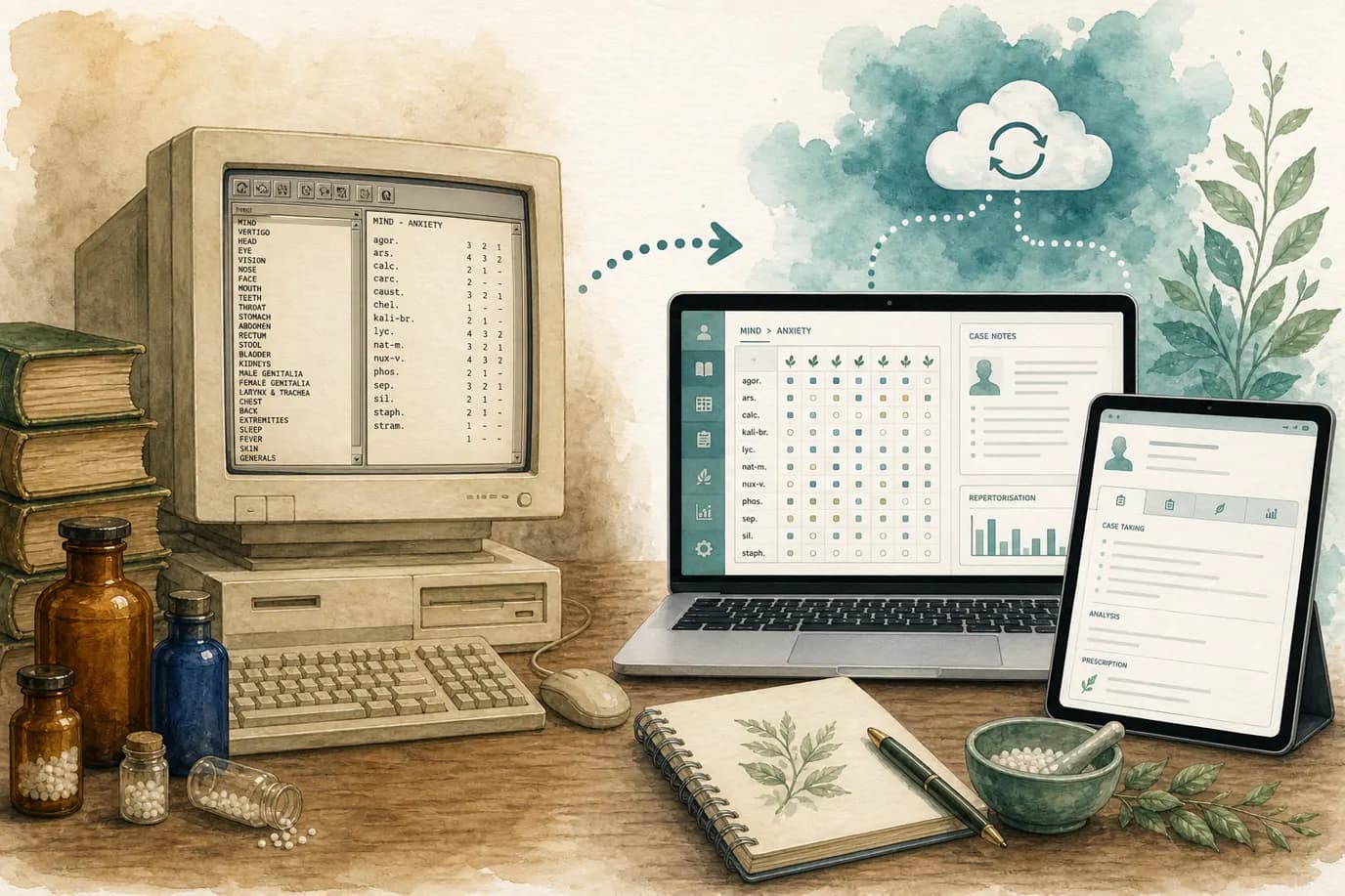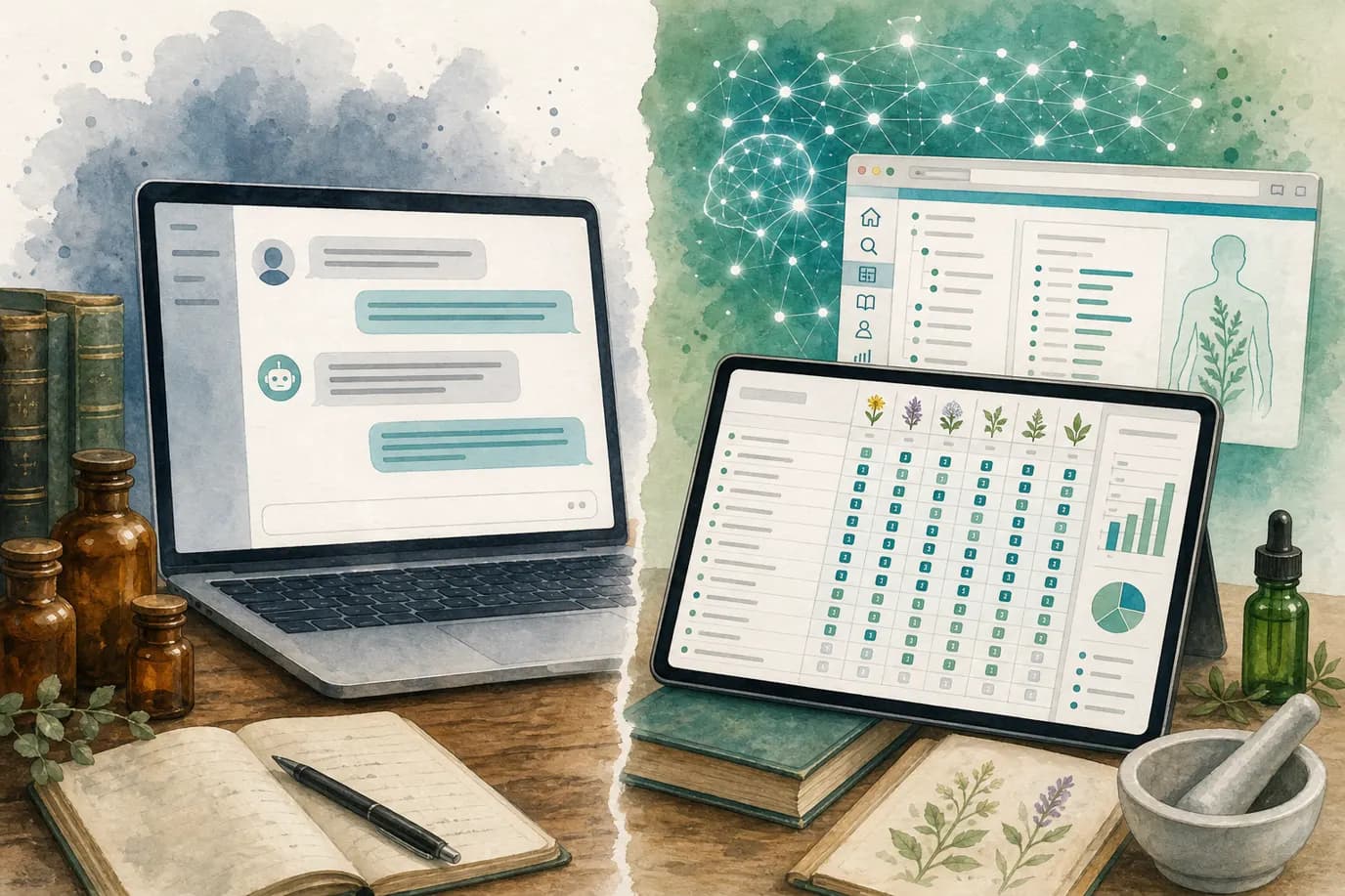

Pour les praticiens et les étudiants en homéopathie, la bonne boîte à outils numérique peut transformer votre manière de répertoriser, de rechercher des remèdes et de gérer les soins aux patients. Les logiciels d’homéopathie modernes avec bibliothèques de répertoire et de matière médicale intégrées sont devenus essentiels pour toute personne souhaitant améliorer la précision, gagner du temps et obtenir des résultats plus constants en pratique clinique.
Ce guide explore ce qui rend un logiciel d’homéopathie efficace, les fonctionnalités clés que chaque praticien devrait rechercher, et la manière dont les principales plateformes actuelles soutiennent les méthodologies homéopathiques classiques et contemporaines.
Pourquoi les logiciels d’homéopathie sont importants
La répertorisation traditionnelle — feuilleter plusieurs volumes, croiser les rubriques à la main et traduire le langage du patient en terminologie classique — est lente, sujette aux erreurs et difficile, surtout pendant les consultations aiguës. Les logiciels numériques répondent à ces goulots d’étranglement du flux de travail en offrant une recherche instantanée dans des dizaines de répertoires et de volumes de matière médicale, vous permettant de :
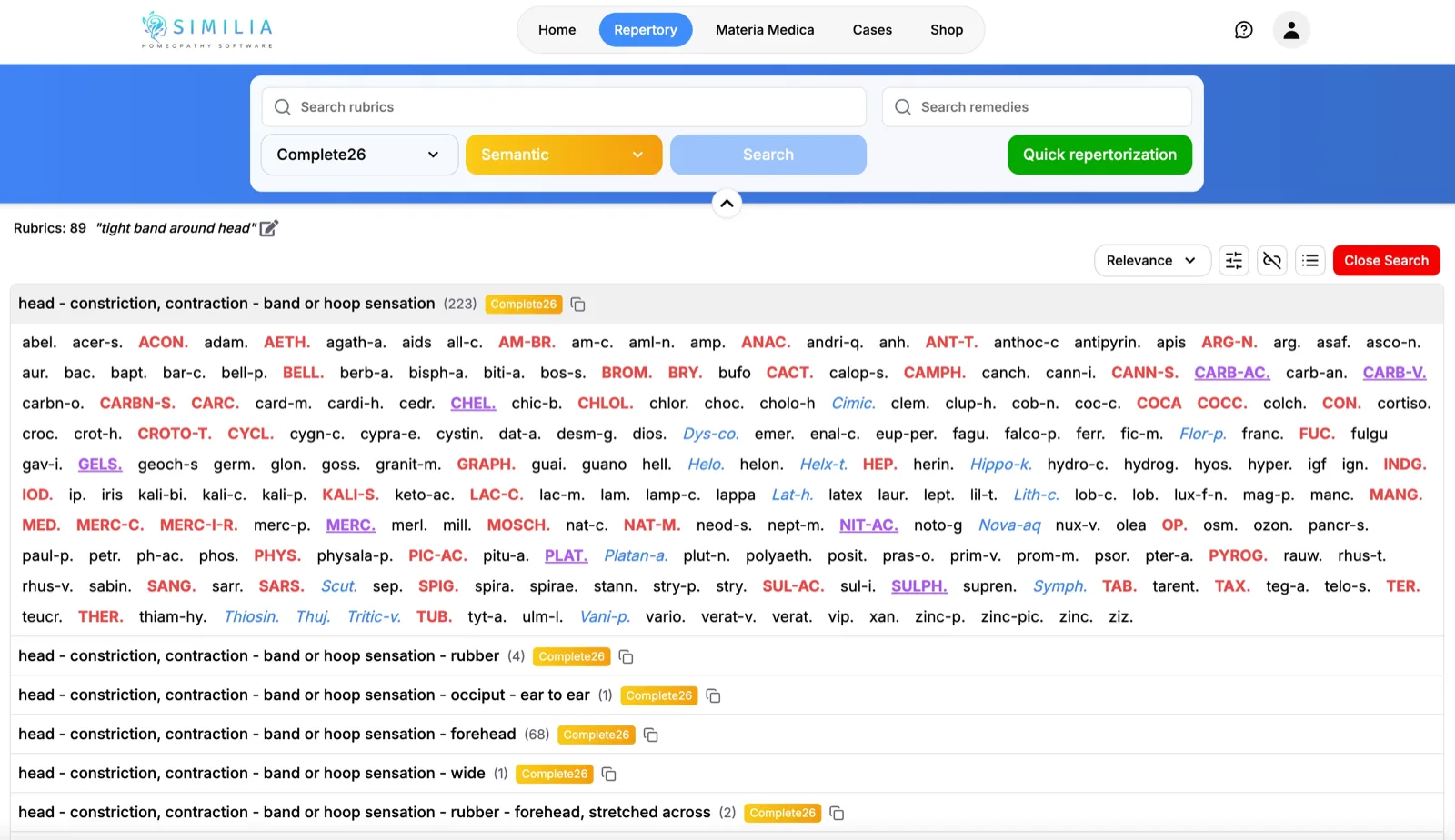
- Répertoriser plus vite : Recherchez par symptôme, mot-clé ou expression clinique et visualisez instantanément les rubriques correspondantes dans Kent, Boenninghausen, Murphy, Complete Repertory et d’autres sources faisant autorité.
- Combler les écarts de langage : La technologie de recherche sémantique comprend la formulation clinique moderne et la fait correspondre au langage classique du répertoire, de sorte que « toux sèche persistante la nuit » se relie automatiquement aux rubriques pertinentes de Kent ou de Boger.
- Croiser les remèdes : Consultez les profils complets des remèdes, les groupes de symptômes mentaux, physiques et constitutionnels, ainsi que la matière médicale comparative de plusieurs auteurs (Clarke, Allen, Boericke, Hering) dans une seule interface.
- Gérer les cas de façon centralisée : Gardez les consultations, prescriptions, suivis et notes patient organisés, consultables et synchronisés sur tous vos appareils.
Fonctionnalités essentielles d’un logiciel d’homéopathie
Lorsque vous évaluez un logiciel pour votre pratique ou vos études, privilégiez les capacités suivantes :
Bibliothèques de répertoires complètes
Une plateforme robuste devrait donner accès à plusieurs répertoires classiques et modernes. Pour un examen détaillé des différences entre les principaux répertoires et de la manière de naviguer spécifiquement dans le répertoire de Kent, consultez nos guides dédiés — et si vous découvrez cette catégorie, notre article explicatif sur le fonctionnement des logiciels de répertoire couvre la répertorisation numérique depuis les bases. Les logiciels de référence incluent généralement :
- Le répertoire de Kent
- Boenninghausen's Therapeutic Pocket Book
- Murphy's MetaRepertory 4th ed.
- Complete Repertory (éditions mises à jour jusqu’en 2026)
- Saine Repertory (éditions 2025 et ultérieures)
- Synthesis Repertory (si disponible)
- Boger-Boenninghausen, Knerr et d’autres ouvrages spécialisés
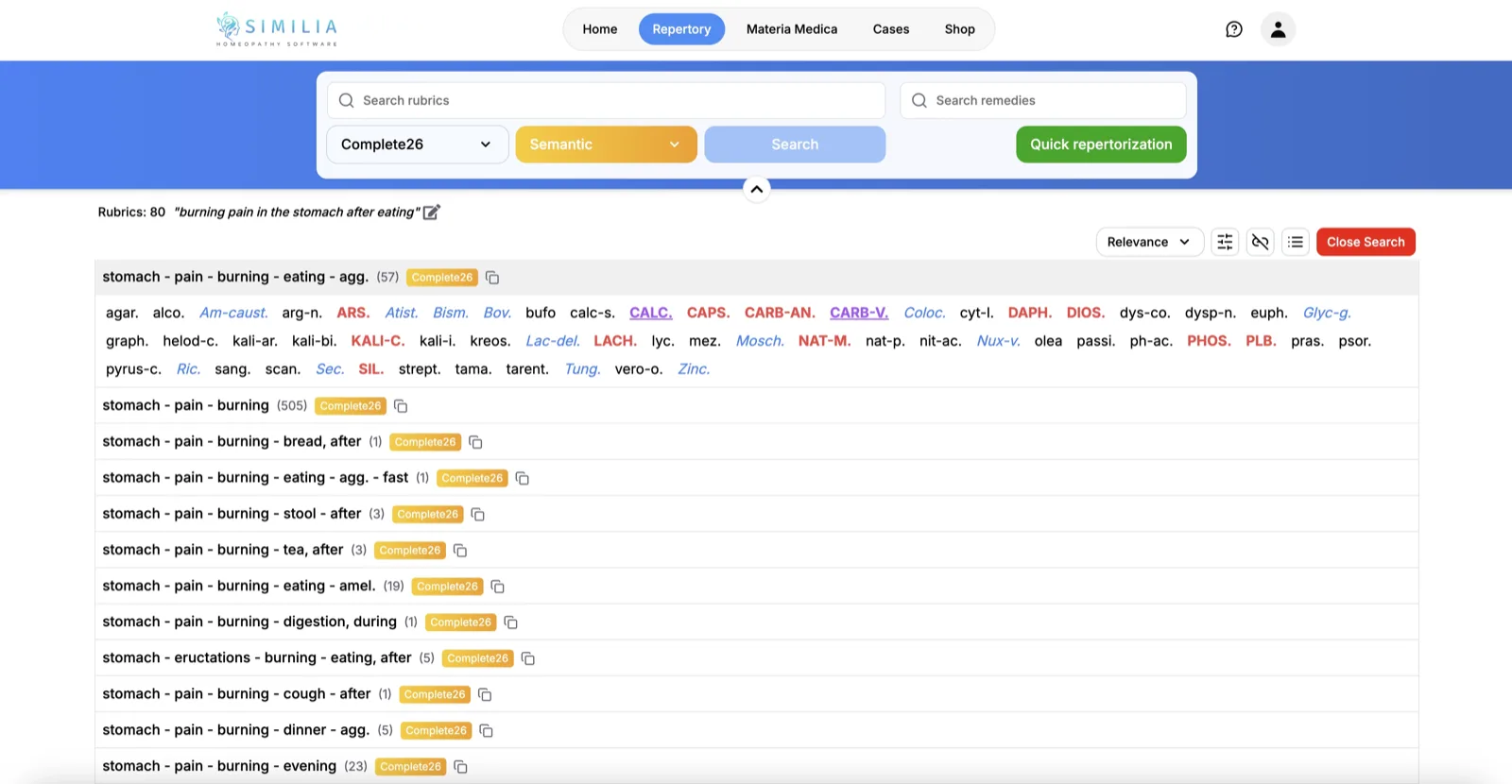
La bibliothèque de répertoires de Similia offre une recherche sémantique dans 14 répertoires, ce qui facilite la recherche de rubriques sans mémoriser la formulation classique exacte. Que vous travailliez sur un cas chronique nécessitant une analyse constitutionnelle nuancée ou sur une présentation aiguë exigeant une sélection rapide des rubriques, l’étendue et la profondeur de l’accès au répertoire influencent directement votre confiance dans la prescription.
Ressources étendues de matière médicale
La couverture de la matière médicale est tout aussi importante. Un logiciel de qualité intègre :
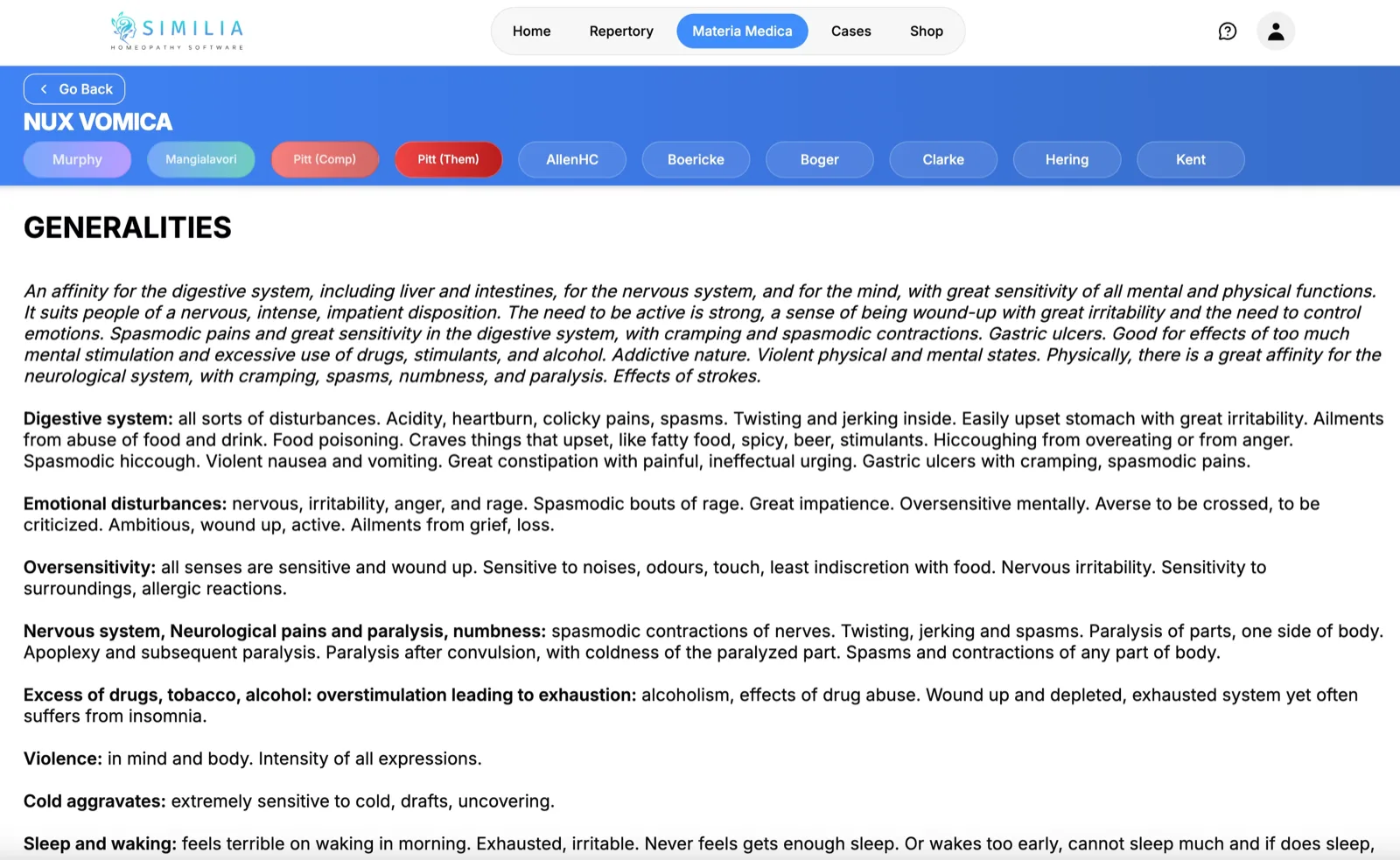
- Clarke's Dictionary of Practical Materia Medica
- Allen's Keynotes and Characteristics
- Boericke's Materia Medica with Repertory
- Hering's Guiding Symptoms
- Murphy's Nature's Materia Medica (éditions Pro)
- Pathogénésies, conseils cliniques et outils de comparaison des remèdes
La fonctionnalité de recherche devrait vous permettre d’interroger par nom de remède, symptôme ou indication clinique, et de croiser les résultats entre les auteurs. Cela est essentiel pour confirmer les diagnostics différentiels et comprendre les tableaux de remèdes sous plusieurs angles. Pour une exploration plus approfondie de la façon dont ces outils fonctionnent ensemble, consultez notre guide sur matière médicale vs répertoire.
Recherche sémantique et outils alimentés par l’IA
La recherche traditionnelle par mots-clés manque souvent des rubriques en raison d’un langage ancien. La recherche sémantique — qui comprend le sens et le contexte derrière votre requête — représente une amélioration majeure. Les plateformes modernes comme Similia intègrent des outils alimentés par l’IA qui :
- Transcrivent les consultations en direct et extraient automatiquement les symptômes
- Associent les notes patient aux rubriques recommandées
- Analysent les photos de symptômes téléversées et suggèrent les rubriques pertinentes
- Prennent en charge les requêtes en langage naturel (« céphalée pulsatile aggravée en se penchant en avant ») et renvoient des rubriques dans Kent, Murphy et d’autres répertoires
Cette technologie raccourcit les flux de travail de prise de cas et réduit le risque de négliger des rubriques pertinentes en raison de barrières linguistiques.
Gestion des patients et organisation des cas
Au-delà des bibliothèques de référence, un logiciel d’homéopathie efficace inclut des fonctionnalités de gestion de cabinet :
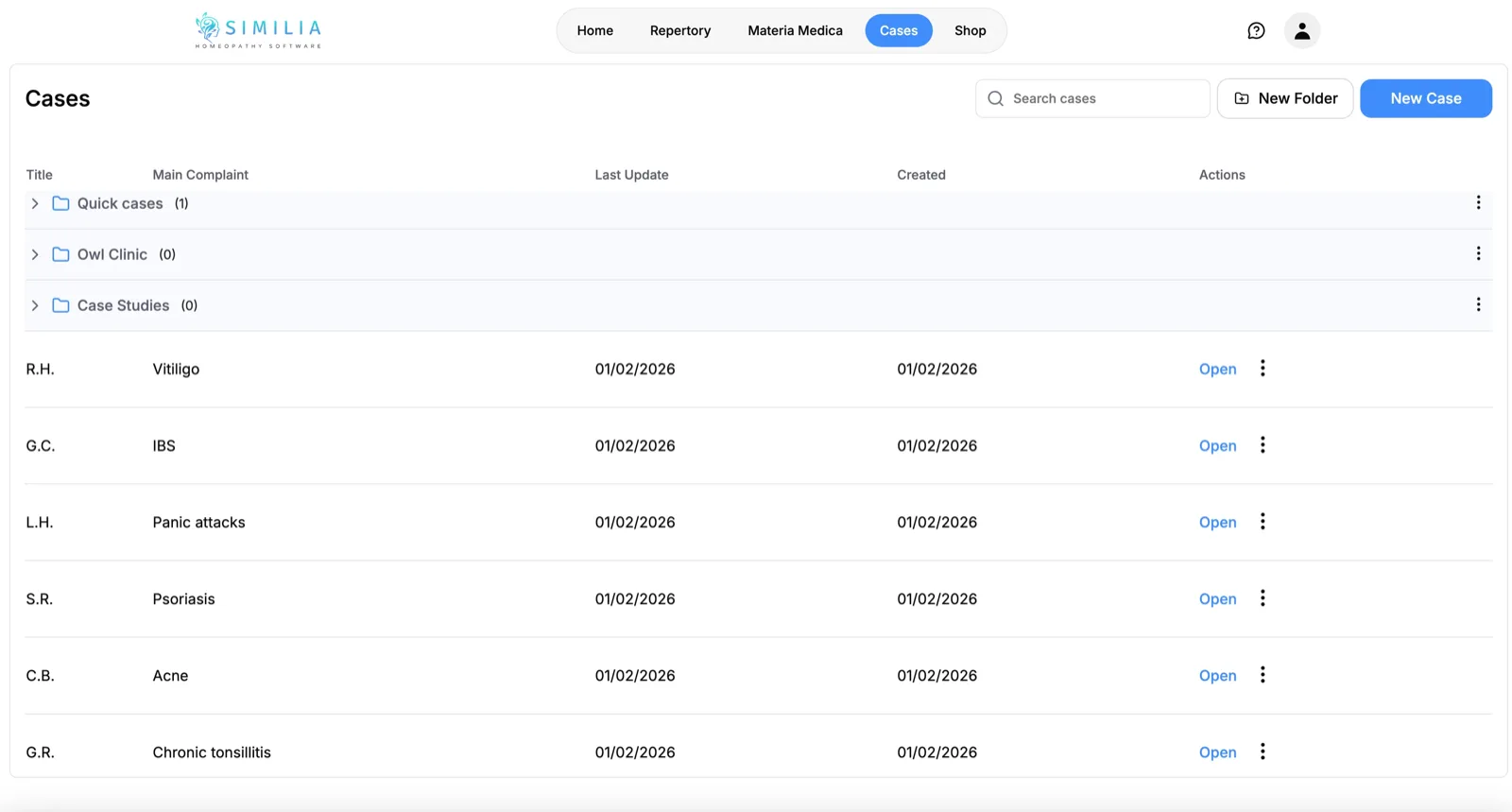
- Dossiers de cas : Stockez et retrouvez les antécédents des patients, les consultations et les prescriptions dans un emplacement sécurisé unique.
- Suivi des consultations : Planifiez des rappels, consignez les notes d’évolution et surveillez les réponses aux remèdes au fil du temps.
- Synchronisation cloud : Accédez aux cas depuis votre ordinateur portable, votre tablette ou votre téléphone, garantissant la continuité que vous soyez au cabinet, de garde ou en train d’enseigner.
- Modèles de prescription : Générez des prescriptions professionnelles avec dynamisations, schémas posologiques et instructions de suivi.
La gestion des patients de Similia prend en charge tous ces flux de travail tout en maintenant une protection des données prête pour la HIPAA et conforme au RGPD — essentielle pour les praticiens qui traitent des informations sensibles de patients dans plusieurs juridictions.
Sécurité des données et conformité
Si vous gérez des dossiers patient sous forme numérique, vérifiez que votre logiciel respecte les normes réglementaires :
- Chiffrement en transit et au repos (TLS 1.3 et AES-256 sont les meilleures pratiques actuelles)
- Préparation à la HIPAA (pour les praticiens aux États-Unis) et conformité au RGPD (pour les utilisateurs de l’UE)
- Audits de sécurité réguliers et infrastructure d’hébergement de niveau entreprise
Toute plateforme qui stocke des informations de santé devrait documenter de manière transparente ses mesures de sécurité et ses certifications de conformité.
Comment choisir le bon logiciel pour votre pratique
Les priorités varient selon les praticiens. Considérez ces questions :
-
Êtes-vous étudiant ou professionnel ? Les étudiants ont généralement besoin d’un accès gratuit robuste aux répertoires classiques (Kent, Boger) et à une matière médicale de base pour les cours et la pratique supervisée. Les professionnels requièrent souvent des fonctionnalités avancées comme des éditions premium de répertoires, la transcription par IA, le stockage illimité des cas et des outils de gestion de cabinet.
-
Préférez-vous un logiciel cloud ou de bureau ? Les plateformes cloud offrent une synchronisation entre appareils, des mises à jour automatiques et aucune difficulté d’installation, mais nécessitent une connexion Internet fiable. Les logiciels de bureau peuvent offrir un accès hors ligne, mais ils peuvent être plus difficiles à mettre à jour et à synchroniser.
-
Quel est votre budget ? De nombreuses plateformes proposent des offres gratuites avec un accès de base au répertoire et à la matière médicale (Similia, OOREP), ainsi que des abonnements Pro qui débloquent des répertoires premium, l’analyse par IA et des cas illimités. Les logiciels de bureau traditionnels (RadarOpus, Hompath Zomeo, Synergy) impliquent généralement des frais d’achat uniques ou des abonnements annuels, et peuvent coûter de plusieurs centaines à plusieurs milliers de livres/euros par an.
-
Quelle importance accordez-vous à l’accès mobile ? Si vous consultez en déplacement ou enseignez dans plusieurs lieux, privilégiez les logiciels avec des applications mobiles complètes ou des interfaces web responsives.
-
Avez-vous besoin d’un support multilingue ? Vérifiez si la plateforme prend en charge vos langues préférées pour l’interface utilisateur, le contenu du répertoire et la recherche dans la matière médicale.
Similia : offres gratuites et Pro pour chaque utilisateur
Similia se positionne comme un choix de premier plan pour les étudiants comme pour les praticiens en combinant une offre gratuite généreuse avec des fonctionnalités Pro avancées. La plateforme est construite autour de la recherche sémantique, ce qui signifie que vous pouvez saisir les symptômes des patients en langage courant et récupérer instantanément les rubriques pertinentes dans 14 répertoires et plus de 20 sources de matière médicale.
Fonctionnalités gratuites (aucune carte bancaire requise) :
- Accès complet aux répertoires classiques, notamment Kent, Boenninghausen et d’autres
- Recherche dans la matière médicale de base (Clarke, Allen, Boericke, Hering)
- Gestion des cas patient (avec des limites raisonnables)
- Synchronisation cloud entre appareils
Les offres Pro ajoutent :
- Analyse IA des photos et des notes (téléversez des images de symptômes ou des notes saisies pour une extraction automatique des rubriques)
- Recherche premium dans la matière médicale (Murphy's Nature's MM 4th ed. et d’autres volumes avancés)
- Cas et analyses illimités
- Tableau périodique interactif
- Accès aux éditions premium de répertoires (Murphy's MetaRepertory, Complete Repertory 2026, Saine Repertory 2025)
L’interface moderne et rapide de Similia est conçue pour réduire les frictions de la répertorisation numérique, et la plateforme bénéficie de la confiance de plus de 4 000 praticiens dans le monde. Que vous soyez étudiant à la recherche d’un outil d’apprentissage gratuit et puissant, ou homéopathe expérimenté souhaitant une analyse de cas avancée alimentée par l’IA et un accès à des répertoires premium, le modèle par niveaux de Similia s’adapte à vos besoins. Pour une présentation détaillée de ce qui est inclus dans chaque niveau, consultez notre guide complet des offres Similia Free vs Pro.
Comparer les options logicielles : points clés à considérer
Lorsque vous comparez des logiciels d’homéopathie, prêtez attention à :
- Nombre de répertoires et éditions : Avez-vous accès à Complete Repertory 2026 ou Saine 2025 mis à jour, ou seulement à des éditions plus anciennes ?
- Volume de matière médicale : Combien de livres sont inclus, et sont-ils consultables entre auteurs ?
- Qualité de la recherche : Le logiciel peut-il gérer les requêtes en langage naturel, les synonymes et les termes anciens ?
- Support mobile et hors ligne : Pouvez-vous travailler depuis votre téléphone ou votre tablette ? L’accès hors ligne est-il disponible ?
- Coût total de possession : Tenez compte des frais d’abonnement, des coûts de mise à jour et de tout matériel ou licence de système d’exploitation requis.
- Formation et support : Des tutoriels vidéo, webinaires et un support client réactif sont-ils inclus ?
Réflexions finales
Choisir un logiciel d’homéopathie avec répertoire et matière médicale intégrés est l’une des décisions les plus importantes pour votre pratique ou vos études. La bonne plateforme accélère la répertorisation, approfondit votre recherche sur les remèdes, organise vos cas et vous permet de vous concentrer sur l’essentiel : comprendre vos patients et trouver le similimum.
Que vous privilégiez une solution gratuite basée sur le cloud avec recherche alimentée par l’IA comme Similia, un logiciel de bureau traditionnel avec des bibliothèques exhaustives, ou une application mobile spécialisée pour une référence rapide au chevet du patient, assurez-vous que le logiciel correspond à votre flux de travail, à votre budget et à vos objectifs à long terme. Évaluez les essais gratuits, explorez les comparaisons de fonctionnalités et réfléchissez à la manière dont la plateforme soutiendra votre croissance en tant que praticien.
L’avenir de la pratique homéopathique est numérique, intelligent et accessible — commencez à explorer dès aujourd’hui pour trouver la boîte à outils qui transformera votre répertorisation et votre analyse des cas pour les années à venir.