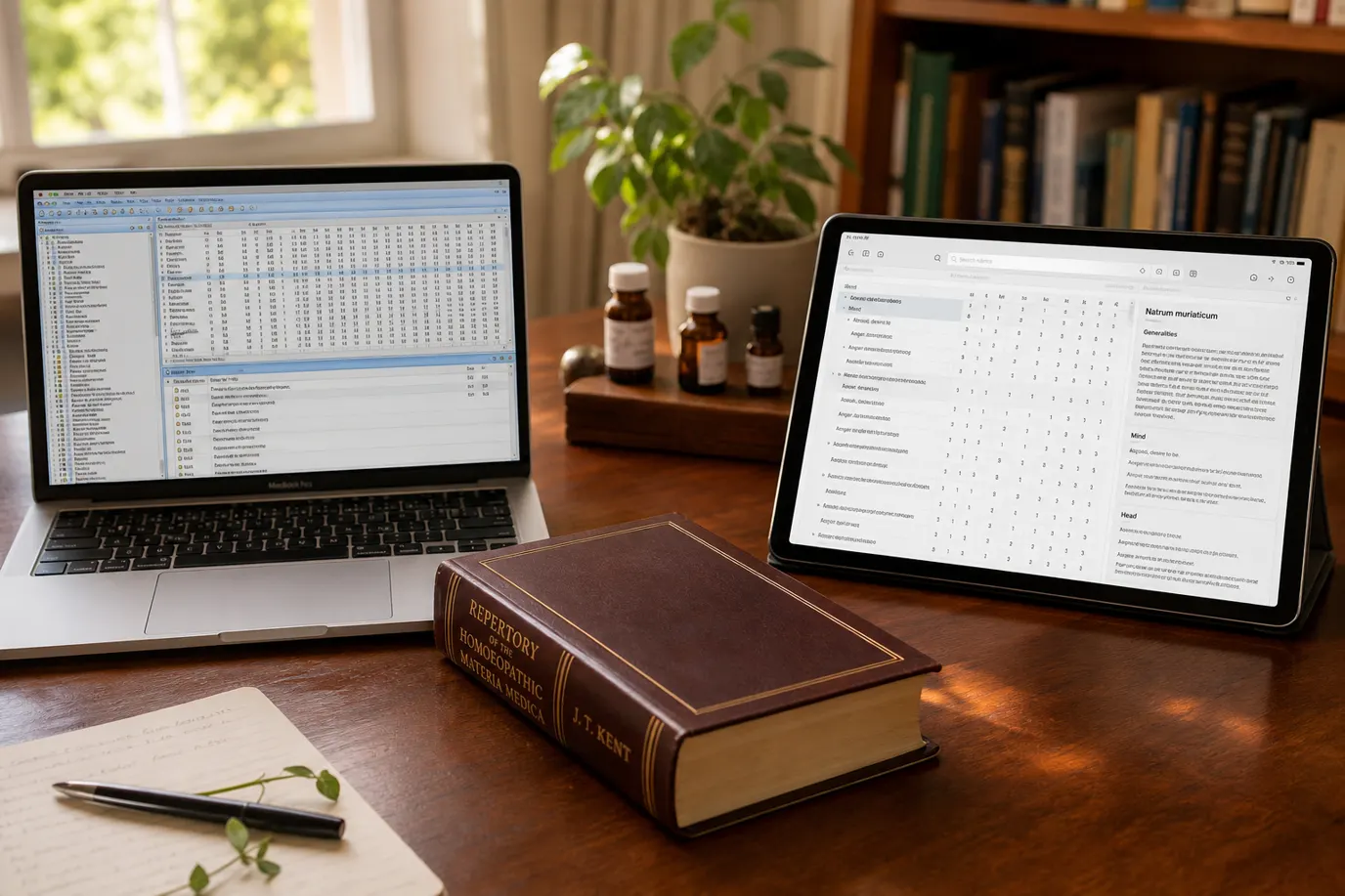
यदि आप 2026 में Synergy Homeopathic (Synergy Viva या Synergy SHS) की तुलना Similia से कर रहे हैं, तो संक्षेप में: Synergy Homeopathic, Synergy Homeopathic Inc. (पूर्व में SHS, Viva Software) का लंबे समय से उपलब्ध संगणक-आधारित रेपर्टरी और मटेरिया मेडिका अनुप्रयोग है। पुराने MacRepertory और ReferenceWorks की उपयोग-अवधि समाप्त होने के बाद अब यह Synergy Viva के रूप में उपलब्ध है। Similia क्लाउड के लिए मूल रूप से निर्मित मंच है, जिसमें सदा के लिए निःशुल्क स्तर, 8 शास्त्रीय + 7 विशिष्ट रेपर्टरियाँ, AI अर्थ-आधारित खोज और Pro पर पूरा AI उपकरण-समूह मिलता है। सही विकल्प इस पर निर्भर करता है कि आप परिचित कार्यप्रवाह पर आधारित संगणक में स्थापित अनुप्रयोग चाहते हैं या AI-सहायित ब्राउज़र मंच, जो उपकरणों के बीच समन्वय करता है और महीने-दर-महीने आपकी आवश्यकताओं के साथ बढ़ता है।
प्रकटीकरण: मैं Similia का संस्थापक हूँ। मैंने नीचे संतुलित दृष्टिकोण रखने का प्रयास किया है—सुधारों का ईमेल द्वारा स्वागत है।
संक्षेप में — Synergy Homeopathic बनाम Similia की एक झलक
Synergy Homeopathic (अप्रैल 2025 से Synergy Viva ब्रांड के अंतर्गत विपणित) Synergy Homeopathic Inc. द्वारा प्रकाशित Windows/Mac संगणक अनुप्रयोग है, जिसमें ऐच्छिक AI अतिरिक्त सुविधाएँ हैं (जिनका विपणन "Genie" सुविधाओं के रूप में किया जाता है)। Similia वेब-आधारित है (स्थापना आवश्यक नहीं), जिसमें सदा के लिए निःशुल्क स्तर और चार Pro योजनाएँ हैं। इसे AI अर्थ-आधारित खोज, उपकरणों के बीच रोगी-मामला प्रबंधन और AI परामर्श उपकरणों को केंद्र में रखकर बनाया गया है।
| पहलू | Synergy Homeopathic (Viva) | Similia |
|---|---|---|
| मूल्य | मौजूदा SHS स्वामियों के लिए मूल Viva निःशुल्क है; अतिरिक्त सुविधाएँ Synergy की दुकान पर सूचीबद्ध हैं (Genie $500; 5 अतिरिक्त सुविधाओं का समूह $1,100)। संस्करणों के मूल्य: अप्रकाशित / उनकी वेबसाइट देखें | सदा के लिए निःशुल्क + Pro $19.99/माह से (14-दिन का परीक्षण) |
| रेपर्टरियाँ | Reliable Repertory तथा संस्करण-आधारित पुस्तकालय (Essential / Foundation / Professional / Visionary)। सटीक शीर्षक संस्करण के अनुसार बदलते हैं—synergyhomeopathic.com पर पुष्टि करें | 8 शास्त्रीय (निःशुल्क) + 7 विशिष्ट (Pro), जिनमें Complete Repertory 2026 शामिल है |
| मटेरिया मेडिका | संस्करण-आधारित पुस्तकालय (Professional में 970 से अधिक खंड बताए गए हैं)। सार्वजनिक मुखपृष्ठ पर शीर्षकों की पूरी सूची नहीं है | 21 शास्त्रीय पुस्तकें (निःशुल्क) + प्रत्येक Pro स्तर पर Jan Scholten की पूरी शृंखला; अतिरिक्त सुविधाओं सहित कुल 12 से अधिक आधुनिक पुस्तकें |
| AI | ऐच्छिक Synergy Genie अतिरिक्त सुविधा ($500): होम्योपैथी में प्रशिक्षित सहायक; $10 के निःशुल्क क्रेडिट (लगभग 300–400 प्रश्न), उसके बाद $5 के पुनर्भरण | अर्थ-आधारित खोज (निःशुल्क); Notes-to-Rubric, AI विश्लेषण, प्रत्यक्ष ध्वनि, चित्र विश्लेषण (Pro) |
| रोगी-मामला प्रबंधन | संगणक-आधारित; Note Sync $350 की अतिरिक्त सुविधा है | संपूर्ण, उपयोग में सरल और उपकरणों के बीच क्लाउड-समन्वित |
| क्लाउड / संगणक | मूल संगणक अनुप्रयोग (Windows / Mac) | क्लाउड-आधारित; किसी भी ब्राउज़र और किसी भी उपकरण पर चलता है |
| इनके लिए सर्वोत्तम | Synergy / MacRepertory / ReferenceWorks परिवेश में बने रहने वाले चिकित्सक | विद्यार्थी, मोबाइल को प्राथमिकता देकर काम करने वाले और AI में रुचि रखने वाले लोग—साथ ही व्यस्त विशेषज्ञ चिकित्सक |
Synergy Homeopathic क्या है?
Synergy Homeopathic (अब Synergy Viva नाम से) को Synergy Homeopathic Inc. प्रकाशित करता है। यही कंपनी MacRepertory और ReferenceWorks के पीछे थी—होम्योपैथी के दो लंबे समय से उपलब्ध संगणक अनुप्रयोग, जिनका सक्रिय विकास 30 अप्रैल 2025 को समाप्त हो गया। विक्रेता की अपनी वेबसाइट के अनुसार, Synergy Viva को उन पुराने अनुप्रयोगों के उत्तराधिकारी के रूप में अप्रैल 2025 में प्रस्तुत किया गया था। इसे मूल Windows/Mac कार्यक्रम के रूप में बनाया गया है और इसमें "Genie" जैसे नामों के अंतर्गत विपणित ऐच्छिक AI-संचालित सुविधाएँ हैं।
Synergy अपनी दुकान पर Viva के कुछ मूल्य सूचीबद्ध करता है: मौजूदा SHS स्वामी Viva का मूल कार्यक्रम बिना अतिरिक्त शुल्क के प्राप्त कर सकते हैं और ऐच्छिक अतिरिक्त सुविधाओं के मूल्य synergyhomeopathic.com पर प्रकाशित हैं (Genie $500; Note Sync $350; Deep View $300; Rep Maker $100; Smart Reader $50; सभी पाँच का समूह $1,100)। संस्करण पैकेजों (Essential, Foundation, Professional, Visionary) के लिए अभी भी विक्रेता से वर्तमान मूल्य माँगना पड़ता है। यह मंच उन MacRepertory और ReferenceWorks उपयोगकर्ताओं के लिए आधिकारिक स्थानांतरण मार्ग है, जो Synergy परिवेश में बने रहना चाहते हैं। Synergy Viva एक संगणक अनुप्रयोग है, जिसे स्थापित करना पड़ता है और प्रत्येक मशीन के लिए अलग अनुज्ञप्ति चाहिए, ठीक इसके पुराने पूर्ववर्तियों की तरह।
MacRepertory की उपयोग-अवधि समाप्त होने और चिकित्सकों द्वारा अन्य विकल्प अपनाने के कारणों के संदर्भ के लिए हमारी MacRepertory विकल्प मार्गदर्शिका देखें।
Similia क्या है?
Similia क्लाउड के लिए मूल रूप से निर्मित आधुनिक होम्योपैथी मंच है, जिसमें सदा के लिए निःशुल्क स्तर और चार Pro संस्करण हैं। यह संगणक, टैबलेट या फ़ोन पर किसी भी आधुनिक ब्राउज़र में चलता है। निःशुल्क स्तर में आठ शास्त्रीय रेपर्टरियाँ (Kent, Boericke, Boger's BBCR, Boenninghausen's Therapeutic Pocketbook, Hering's Guiding Symptoms, Boger's Synoptic Key, Ward's और Roberts' Sensations As If), मटेरिया मेडिका की 21 शास्त्रीय पुस्तकें (Kent, Boericke, Clarke, H. C. Allen, Hahnemann, Farrington, Dunham, Guernsey, Hughes & Dake, Hale, Hering, Nash, Boger, Lippe, Paterson और अन्य), AI-संचालित अर्थ-आधारित खोज तथा प्रति माह अधिकतम 3 नए रोगी-मामलों और 3 विश्लेषणों वाला बुनियादी रोगी-मामला प्रबंधन मिलता है।
प्रत्येक Pro स्तर (Base, Murphy, Complete, Saine) पूरा AI उपकरण-समूह खोलता है (Notes-to-Rubric द्वारा निष्कर्षण, AI Case Analysis, प्रत्यक्ष परामर्श ध्वनि का लिप्यंतरण, AI Photo Analysis), साथ ही Jan Scholten की मटेरिया मेडिका की पूरी शृंखला (Elements, Lanthanides, Minerals, Mosses, Ferns, Qjure, Wonderful Plants—मटेरिया मेडिका की 7 आधुनिक पुस्तकें), मटेरिया मेडिका खोज, आवर्त सारणी और असीमित रोगी-मामले उपलब्ध कराता है। Pro परिवेश में सात तक विशिष्ट रेपर्टरियाँ उपलब्ध हैं—Murphy's MetaRepertory (Pro Murphy), Complete Repertory 2026 (Pro Complete) या Saine Repertory 2025 (Pro Saine) के लिए उनसे मेल खाने वाला संस्करण चुनें। Suggesta 2.1, Qrep5, Mangialavori 100 MM और अन्य विस्तारों को एकमुश्त भुगतान वाली अतिरिक्त सुविधाओं के रूप में जोड़ें।
मूल्य Similia मूल्य पृष्ठ पर प्रकाशित हैं: निःशुल्क, Pro Base $19.99/माह, Pro Murphy और Pro Complete $29.99/माह, Pro Saine $26.99/माह—सभी के साथ 14-दिन का निःशुल्क परीक्षण।
आमने-सामने तुलना
मूल्य
Synergy Homeopathic (Viva) अपनी दुकान पर अतिरिक्त सुविधाओं के मूल्य प्रकाशित करता है (ऊपर दी गई तालिका देखें)। वर्तमान SHS अनुज्ञप्तिधारकों के लिए मूल Viva निःशुल्क है। नए खरीदारों के लिए संस्करण पैकेजों के मूल्य सार्वजनिक मुखपृष्ठ पर पूरी तरह सूचीबद्ध नहीं हैं—अप्रकाशित / उनकी वेबसाइट देखें, या Synergy Homeopathic Inc. से पूछें।
Similia के मूल्य पारदर्शी हैं: निःशुल्क, Pro Base $19.99/माह, Pro Murphy $29.99/माह, Pro Complete $29.99/माह, Pro Saine $26.99/माह। Suggesta 2.1 ($299.99), Qrep5 ($99.99) और Mangialavori 100 MM ($119.99) जैसी ऐच्छिक एकमुश्त भुगतान वाली अतिरिक्त सुविधाएँ भी उपलब्ध हैं।
यदि आप MacRepertory या ReferenceWorks से स्थानांतरित हो रहे हैं और समय के साथ कुल लागत का अनुमान लगाने की कोशिश कर रहे हैं, तो क्लाउड सदस्यता प्रारूप का अर्थ है अनुमान योग्य मासिक शुल्क और अप्रत्याशित उन्नयन शुल्क का अभाव—लेकिन इसमें “एक बार खरीदें और बात समाप्त” वाला विकल्प भी नहीं है। संगणक अनुज्ञप्ति अक्सर इसके विपरीत चलती है: आरंभिक लागत अधिक होती है और फिर कभी-कभार सशुल्क उन्नयन आते हैं।
रेपर्टरियाँ
Synergy Viva का रेपर्टरी संग्रह संस्करण के अनुसार बदलता है। पुराने MacRepertory और ReferenceWorks में अलग-अलग स्तरों पर Kent, Boericke, Boenninghausen और Complete Repertory उपलब्ध थे; Synergy Viva के प्रत्येक संस्करण का सटीक रेपर्टरी समूह सार्वजनिक वेबसाइट पर मदवार सूचीबद्ध नहीं है (अगस्त 2026 तक)। खरीदने से पहले विक्रेता से रेपर्टरी सूची की पुष्टि करें।
Similia में निःशुल्क + Pro को मिलाकर 15 रेपर्टरियाँ हैं: 8 शास्त्रीय रेपर्टरियाँ निःशुल्क स्तर पर (Kent, Boericke, BBCR, Synoptic Key, Hering, Ward, Roberts, TPB) और 7 विशिष्ट रेपर्टरियाँ Pro पर (Murphy's MetaRepertory, Complete Repertory 2026, Saine Repertory 2025, Suggesta 2.1 तथा अन्य विस्तार)। एक ही अर्थ-आधारित खोज पट्टी से प्रत्येक रेपर्टरी को समानांतर रूप से खोजा जा सकता है।
मटेरिया मेडिका
Synergy Viva का मटेरिया मेडिका पुस्तकालय प्रत्येक संस्करण के साथ समूहबद्ध है, लेकिन विक्रेता की वेबसाइट पर इसकी सार्वजनिक मदवार सूची नहीं दी गई है। पुराने MacRepertory और ReferenceWorks उपयोगकर्ता ReferenceWorks के मटेरिया मेडिका पुस्तकालय की गहराई से परिचित होंगे; पुष्टि करें कि उसमें से क्या-क्या Synergy Viva में आगे उपलब्ध रहता है।
Similia की मटेरिया मेडिका मदवार सूचीबद्ध है: निःशुल्क स्तर पर 21 शास्त्रीय पुस्तकें (Kent, Boericke, Clarke, H. C. Allen, Hahnemann, Farrington, Dunham, Guernsey, Hughes & Dake, Hale, Boger, Hering, Nash, Lippe, Paterson और अन्य)। प्रत्येक Pro संस्करण में Jan Scholten की पूरी शृंखला (Elements, Lanthanides, Minerals, Mosses, Ferns, Qjure, Wonderful Plants—मटेरिया मेडिका की 7 आधुनिक पुस्तकें) शामिल है; Pro Murphy में Murphy's Nature's MM 4th ed. भी शामिल है। Suggesta 2.1, Mangialavori 100 MM, Qrep5 और अन्य आधुनिक मटेरिया मेडिका सशुल्क अतिरिक्त सुविधाओं के रूप में उपलब्ध हैं, जिससे उपलब्ध आधुनिक शीर्षकों की कुल संख्या 12 से अधिक हो जाती है।
मटेरिया मेडिका में AI अर्थ-आधारित खोज आपको सरल भाषा में सभी भरे हुए स्रोतों को एक साथ खोजने देती है—लेखन के समय Synergy Viva द्वारा इस सुविधा का प्रचार नहीं किया गया था।
खोज: Synergy Genie बनाम Similia की अर्थ-आधारित + AI खोज
Synergy Viva, "Genie" ब्रांड के अंतर्गत ऐच्छिक AI सुविधाओं का विपणन करता है। Genie वास्तव में क्या करता है—अर्थ-आधारित खोज, लक्षण निष्कर्षण, विश्लेषण या कुछ और—इसका विवरण सार्वजनिक वेबसाइट पर निर्दिष्ट नहीं है (अगस्त 2026 तक)। मुख्य शब्दों पर आधारित रेपर्टरी खोज के अभ्यस्त चिकित्सकों के लिए यही तुलना का निर्णायक बिंदु है: क्या Genie स्वाभाविक भाषा में लिखे लक्षण-विवरण स्वीकार करके उन्हें रूब्रिक से जोड़ता है, और यदि हाँ, तो इसकी तुलना अन्य उपकरणों से कैसी है?
Similia में खोज मूल रूप से अर्थ-आधारित है और इसे विशाल भाषा प्रतिरूपों पर बनाया गया है। scared of the dark या stomach pain after eating जैसी सरल अंग्रेज़ी की सटीक अभिव्यक्ति लिखें, और मंच प्रत्येक भरी हुई रेपर्टरी से मेल खाने वाले रूब्रिक सामने लाता है; इसके लिए आपको Kent या Boericke की प्रयुक्त सटीक शब्दावली जानने की आवश्यकता नहीं होती। यह प्रत्येक स्तर पर निःशुल्क शामिल है।
Pro में Notes-to-Rubric (परामर्श टिप्पणियाँ चिपकाएँ और निकाले गए लक्षण तथा प्रस्तावित रूब्रिक पाएँ), AI Case Analysis (विभेदक औषधि सुझाव और लक्षणों का विभेदन), प्रत्यक्ष ध्वनि लिप्यंतरण (परामर्श को वास्तविक समय में दर्ज करके रूब्रिक से स्वतः जोड़ना) और AI Photo Analysis (जीभ, त्वचा और घावों के चित्रों को रूब्रिक सुझावों में बदलना) जुड़ते हैं।
यदि Synergy Viva की Genie सुविधाएँ तुलनीय अर्थ-आधारित खोज और लक्षण निष्कर्षण देती हैं, तो वे प्रतिस्पर्धी हो सकती हैं; यदि Genie केवल मुख्य शब्दों की खोज को बेहतर बनाता है या पारंपरिक खोज को विस्तृत करता है, तो Similia का AI संरचनात्मक रूप से अधिक शक्तिशाली है।
रोगी-मामला प्रबंधन
Synergy Viva के संगणक अनुप्रयोग में रोगी-मामला प्रबंधन शामिल है। रोगी-मामले आपकी स्थानीय मशीन पर रहते हैं; क्लाउड समन्वय इसका पूर्वनिर्धारित कार्यप्रवाह नहीं है, हालाँकि विक्रेता की वेबसाइट पर ऑनलाइन सुविधाओं का उल्लेख है—वर्तमान समन्वय प्रारूप की पुष्टि Synergy Homeopathic Inc. से करें।
Similia में संपूर्ण और उपयोग में सरल रोगी-मामला प्रबंधन मिलता है, जिसे क्लाउड को प्राथमिकता देकर बनाया गया है। रोगी-मामले प्रेषण के दौरान और संग्रहीत अवस्था में कूटबद्ध रहते हैं, आपके सभी प्रवेश-किए हुए उपकरणों के बीच समन्वित होते हैं और किसी भी आधुनिक ब्राउज़र से सुलभ हैं। अंतराफलक इस प्रकार बनाया गया है कि कोई नया विद्यार्थी बिना प्रशिक्षण के अपना पहला रोगी-मामला आरंभ से अंत तक दर्ज कर सके, जबकि अनुभवी चिकित्सकों को रूब्रिक भारांकन, रोगी-मामले के इतिहास, अनुवर्ती परामर्शों और विश्लेषण पर पूरा नियंत्रण मिलता रहे।
मंच और उपकरण
Synergy Viva Windows और macOS पर मूल अनुप्रयोग के रूप में चलता है। Linux और ChromeOS आधिकारिक रूप से समर्थित नहीं हैं। मोबाइल सहायक अनुप्रयोग अलग से उपलब्ध हो सकते हैं—विक्रेता से पुष्टि करें।
Similia किसी भी आधुनिक ब्राउज़र में चलता है। कुछ भी स्थापित करने की आवश्यकता नहीं है, किसी चालक का प्रबंधन नहीं करना पड़ता और किसी विशेष मंच तक सीमित त्रुटियों की गुंजाइश नहीं रहती। iOS, Android, ChromeOS, Linux, Windows, macOS—सभी पर एक जैसा अनुभव मिलता है।
अद्यतन और भावी योजना
Synergy Viva प्रत्येक अनुज्ञप्ति अवधि में अद्यतन जारी करता है; अद्यतन प्रारूप और उन्नयन मूल्य संरचना विक्रेता की वेबसाइट पर प्रकाशित नहीं हैं (अगस्त 2026 तक)। खरीदने से पहले अद्यतन नीति और किसी भी आवधिक उन्नयन शुल्क की पुष्टि Synergy Homeopathic Inc. से करें।
Similia में लगातार नई सामग्री जारी होती है—रेपर्टरी अद्यतन, AI सुधार और अंतराफलक का परिष्करण बिना किसी हस्तचालित उन्नयन चरण के हर सप्ताह उत्पादन प्रणाली में पहुँचते हैं।
Synergy Homeopathic (Viva) कब बेहतर विकल्प है
- आप MacRepertory या ReferenceWorks से स्थानांतरित हो रहे हैं और उसी परिवेश की निरंतरता चाहते हैं। Synergy Viva उसी प्रकाशक का आधिकारिक उत्तराधिकारी है।
- आप ब्राउज़र-आधारित मंचों की तुलना में संगणक अनुप्रयोग पसंद करते हैं। मूल Windows/Mac अनुप्रयोगों का अनुभव वेब उपकरणों से अलग होता है; यदि उस कार्यप्रवाह से समझौता नहीं किया जा सकता, तो Synergy Viva उसी के लिए बना है।
- आप Synergy के अंतराफलक को पहले से जानते हैं और दोबारा सीखना नहीं चाहते। मंच बदलने में सीखने का समय लगता है; Synergy परिवार में बने रहने से यह समय कम हो जाता है।
Similia कब बेहतर विकल्प है
- आप पाँच अंतर्निहित AI उपकरण चाहते हैं। रेपर्टरी और मटेरिया मेडिका में अर्थ-आधारित खोज, Notes-to-Rubric द्वारा निष्कर्षण, AI Case Analysis, प्रत्यक्ष ध्वनि लिप्यंतरण और AI Photo Analysis। इनमें से किसी का विवरण Synergy Viva की सार्वजनिक वेबसाइट पर नहीं दिया गया है।
- आप व्यस्त विशेषज्ञ चिकित्सक हैं। प्रत्यक्ष लिप्यंतरण + स्वतः मानचित्रण से प्रत्येक परामर्श में 10–15 मिनट बचते हैं; चित्र विश्लेषण जीभ के चित्र को कुछ ही सेकंड में रूब्रिक में बदल देता है। रोगी-मामलों की संख्या बढ़ने के साथ समय की यह बचत भी बढ़ती है।
- आप कई उपकरणों पर काम करते हैं। रोगी-मामलों को घर पर भेंट के दौरान टैबलेट पर और फिर कार्यालय में लैपटॉप पर बिना किसी हस्तचालित समन्वय चरण के उपलब्ध होना चाहिए।
- आप पारदर्शी मूल्य और ऐसा निःशुल्क स्तर चाहते हैं जिसे हमेशा परख सकें। Similia के निःशुल्क स्तर में Kent, Boericke, BBCR, Synoptic Key, Hering, Ward, Roberts, TPB, साथ ही मटेरिया मेडिका की 21 शास्त्रीय पुस्तकें, AI अर्थ-आधारित खोज और प्रति माह अधिकतम 3 नए रोगी-मामलों तथा 3 विश्लेषणों वाला बुनियादी रोगी-मामला प्रबंधन मिलता है।
- आप एक ही स्थान पर अनेक रेपर्टरियों से निष्कर्षों की परस्पर पुष्टि करना चाहते हैं। केवल Similia के निःशुल्क स्तर में आठ शास्त्रीय रेपर्टरियाँ शामिल हैं और Pro सात अन्य जोड़ता है। इसकी तुलना अपने Synergy संस्करण के रेपर्टरी समूह से करें।
निष्कर्ष
Synergy Viva और Similia अलग-अलग कार्यप्रवाहों के लिए बनाए गए हैं। यदि आप MacRepertory या ReferenceWorks से स्थानांतरित हो रहे हैं, संगणक अनुप्रयोग पसंद करते हैं और Synergy परिवेश में बने रहना चाहते हैं, तो Synergy Viva सही उत्तर है। चिकित्सकों के कहीं बड़े समूह—विद्यार्थियों, मोबाइल को प्राथमिकता देकर काम करने वाले चिकित्सकों, AI में रुचि रखने वाले नैदानिक विशेषज्ञों और व्यस्त विशेषज्ञ चिकित्सकों—के लिए Similia सही उत्तर है। उन्हें अनेक रेपर्टरियों वाला AI-सहायित कार्यस्थान, पारदर्शी मूल्य और ऐसा निःशुल्क स्तर मिलता है जिसमें पहले से 8 शास्त्रीय रेपर्टरियाँ, मटेरिया मेडिका की 21 शास्त्रीय पुस्तकें, AI अर्थ-आधारित खोज तथा प्रति माह अधिकतम 3 नए रोगी-मामलों और 3 विश्लेषणों वाला बुनियादी रोगी-मामला प्रबंधन शामिल है; Pro पर असीमित रोगी-मामले और पूरा AI उपकरण-समूह उपलब्ध हैं।
आरंभ कर रहे अधिकांश चिकित्सकों को उपलब्ध होने पर दोनों निःशुल्क स्तरों का उपयोग करना चाहिए और प्रत्येक के साथ एक सप्ताह बिताना चाहिए। यदि आप विकल्पों का दायरा बढ़ाना चाहते हैं, तो 2026 के सर्वोत्तम होम्योपैथी सॉफ्टवेयर का सारांश पाँच उपकरणों की आमने-सामने तुलना करता है और MacRepertory विकल्प मार्गदर्शिका पुराने अनुप्रयोग से क्लाउड पर स्थानांतरण की प्रक्रिया को अधिक विस्तार से समझाती है। इसी चर्चा में शामिल अन्य संगणक रेपर्टरियाँ: OpenRep बनाम Similia, Miccant Vision बनाम Similia और Miccant / ISIS बनाम Similia।