
Toda herramienta de homeopatía se llama profesional a sí misma. La palabra aparece en aplicaciones de aficionados con texto de repertorio extraído sin permiso, en venerables suites de escritorio y en todo lo que queda entre medias, lo que la vuelve inútil como etiqueta y útil como pregunta. ¿Qué tendría que hacer un software, concretamente, para merecerla?
Tras años construyendo para profesionales (y escuchando, en detalle, qué hicieron mal las herramientas anteriores), esta es la lista de comprobación que aplicaría a cualquier opción, incluida la nuestra.
1. Fuentes licenciadas con procedencia visible
El repertorio es una cadena de erudición de dos siglos, y las ediciones modernas — el Complete Repertory, Murphy's MetaRepertory — son obras vivas y licenciadas. El software profesional paga por lo que distribuye y te dice exactamente qué edición estás leyendo. El ecosistema alternativo de texto repertorial extraído y sin atribución tiene dos modos de fallo: exposición legal para el proveedor y corrupción silenciosa de grados e incorporaciones para ti. Un grado que no puedes rastrear es un grado sobre el que no puedes prescribir.
El mismo estándar se aplica a la materia médica: autores nombrados, ediciones nombradas, textos completos; no resúmenes de remedios parafraseados y de origen desconocido.
2. Profundidad donde realmente se ganan los casos
La prescripción aguda puede sobrevivir con keynotes; el trabajo crónico no. El software profesional muestra su profundidad en tres lugares:
- Cobertura de rúbricas — incluidas las rúbricas pequeñas y peculiares donde giran los casos difíciles, no solo los capítulos populares.
- Alcance de la materia médica — suficientes fuentes para verificar un diferencial desde múltiples ángulos: las conferencias de Kent para la visión general, Boericke para la síntesis clínica, Clarke y Allen para el detalle.
- Flexibilidad de análisis — ponderar síntomas, comparar candidatos de remedios lado a lado y moverse entre repertorio y materia médica sin salir del caso.
Una prueba rápida: toma un síntoma extraño y pequeño de un caso real y mira hasta dónde te permite perseguirlo el software. Los juguetes se quedan sin camino en dos clics.
3. Registros que sobrevivirían a una auditoría — y a una década
El registro clínico es donde "profesional" deja de tratarse de funciones y empieza a tratarse de deber. Se aplican dos estándares separados. El clínico: totalidad, análisis, prescripción y seguimientos conservados juntos, para que en 2031 puedas ver por qué tu yo de 2026 eligió Natrum muriaticum. El legal: los datos de salud son datos de categoría especial bajo el RGPD: cifrado, control de acceso, exportación, eliminación y un proveedor que firma un acuerdo adecuado de tratamiento de datos. Nuestras guías sobre registros de práctica y RGPD y HIPAA para homeópatas profundizan en ambos.
Si un proveedor es impreciso sobre dónde viven los datos de pacientes, la conversación ha terminado.
4. La IA como acelerador, no como oráculo
La IA ha cambiado de verdad la mecánica de la práctica profesional: transcripción en vivo que libera tus ojos durante la toma del caso, búsqueda semántica que traduce la formulación del paciente en rúbricas candidatas, diferenciales redactados que amplían el campo que consideras. El estándar profesional para todo ello se resume en una sola palabra: trazabilidad. Toda sugerencia de IA debe resolverse en rúbricas que puedas inspeccionar y fuentes que puedas leer, contigo aprobando o rechazando cada paso. La asistencia que muestra su trabajo potencia tu habilidad; la asistencia que sustituye tu trabajo la erosiona.
5. Fiabilidad durante toda una jornada de trabajo
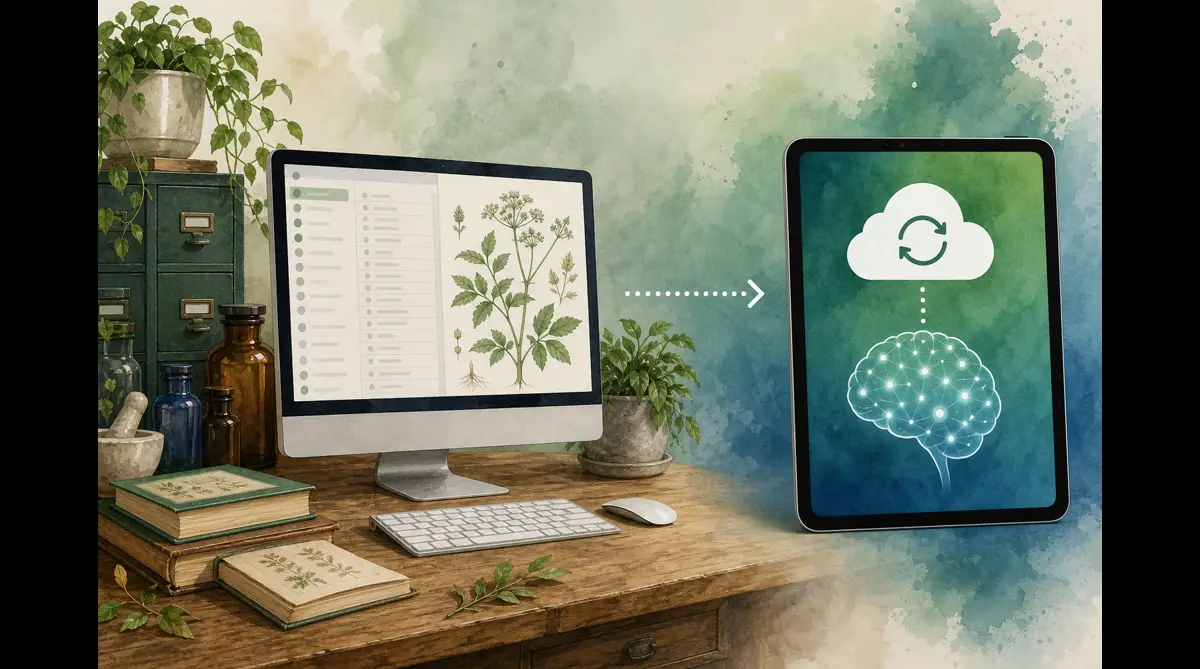
Una consulta moderna es un teléfono en una visita domiciliaria, un ordenador de escritorio en la clínica, una tableta por la noche. El software profesional acompaña: los mismos casos, los mismos repertorios, sin malabarismos de licencias ni tarifas por dispositivo, y una interfaz diseñada para cada pantalla, no simplemente comprimida en ella. El idioma también importa aquí: una consulta que atiende a pacientes en español, alemán, hindi o turco no debería tener que trabajar en inglés. Similia ofrece toda su interfaz en 18 idiomas exactamente por esta razón.
6. Un proveedor construido para seguir existiendo
El criterio menos glamuroso y, para una clínica, uno de los de más peso: precios sostenibles que puedas ver, desarrollo activo que puedas observar y una vía de exportación que respete la posibilidad de marcharte. Los niveles gratuitos para siempre son profesionales cuando el modelo de financiación que los sostiene es visible; en nuestro caso, el contenido de dominio público y las herramientas centrales siguen siendo gratuitos, y las suscripciones Pro financian la capa premium licenciada y las facturas de IA. Lo que debería preocuparte es cualquier herramienta cuya economía no puedas explicar.
Dónde se sitúa Similia frente a su propia lista de comprobación
Juzgado por los seis estándares: repertorios premium licenciados (Murphy, Complete) con procedencia mostrada; una materia médica integrada de múltiples fuentes; registros de casos de nivel RGPD con historial completo; IA que propone y nunca dispone; una plataforma en todos los dispositivos y en 18 idiomas; y precios abiertos con un nivel clínico genuinamente gratuito. La comparación completa de 2026 nos coloca junto a las suites de escritorio establecidas, que conservan fortalezas reales — bibliotecas licenciadas con décadas de profundidad por encima de todo — para consultas ancladas a un flujo de trabajo de escritorio.
Pero la lista de comprobación es el punto de este artículo, no el veredicto. Lleva un caso crónico difícil a cualquier candidato, incluido el nuestro, y puntúalo honestamente frente a los seis estándares. El software profesional es el que todavía parece profesional en la sexta pregunta.