
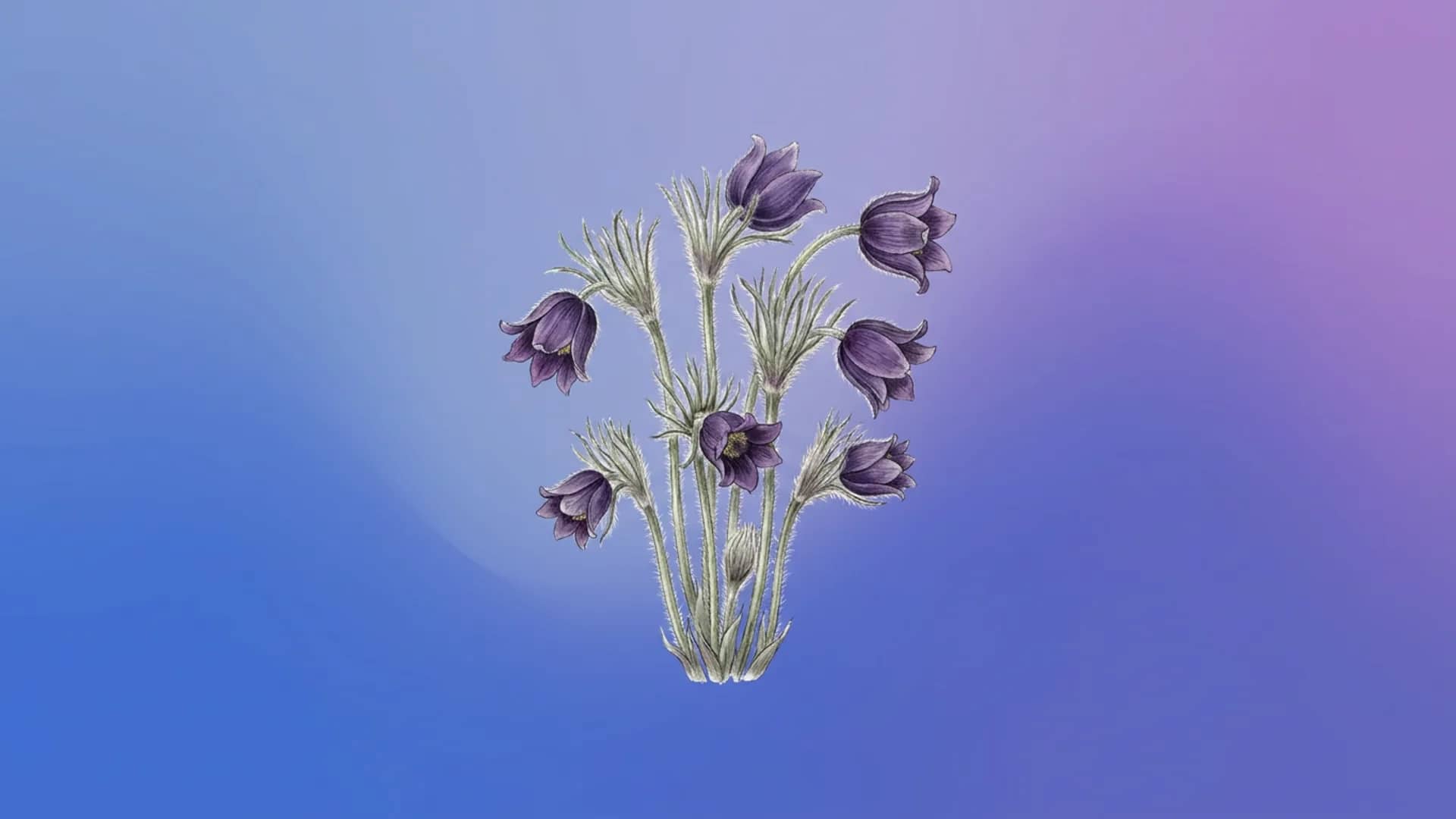
If there is one word that opens the door to Pulsatilla, it is change. Prepared from the wind flower (Pulsatilla pratensis, also called Pulsatilla nigricans), this great polycrest is the archetypal remedy of changeability — of moods that shift from tears to laughter, of pains that wander from joint to joint, of stools and chills no two of which are alike. Classical teachers grouped it with Ignatia and Sepia as one of the "woman's remedies," but for the prescriber the gender association matters far less than the temperament: the mild, gentle, weepy, thirstless, chilly-yet-air-craving patient who is better for company and consolation.
For students and practitioners, Pulsatilla rewards close study because its picture is so coherent. The mind and the body tell the same story. The mutability of the symptoms is the diagnostic, not an obstacle to it. This guide draws on the classical sources — Boericke, Kent's lectures, Clarke's Dictionary, Allen's proving data, and Nash's Leaders — to assemble a study-grade reference that supports both examination revision and live case analysis. For the original texts side by side, you can explore Similia's free digital materia medica.
Definition for quick reference: Pulsatilla (Pulsatilla pratensis / nigricans, the wind flower) is a polycrest homeopathic remedy whose three classical characteristics are peevishness, chilliness, and thirstlessness — with changeability of symptoms as its single most important keynote. This triad is synthesised from Boericke's and Allen's accounts of the remedy.
The Pulsatilla Constitutional Type
The Pulsatilla constitution is defined first and foremost by temperament. These are mild, gentle, yielding people — soft-natured, easily moved, slow to anger and quick to tears. There is a marked indecision and a phlegmatic, dependent quality: they ask for guidance, lean on others, and find it hard to settle a question on their own. Kent describes the disposition as mild and tearful, easily led, and craving the affection and approval of those around them.
Classically the type was painted as fair, blue-eyed, light-haired, and inclined to plumpness, with a tendency to blush and weep. This stereotype is worth knowing because it appears throughout the literature, but the experienced prescriber treats it as a low-grade confirmatory note rather than an entry point. Many sound Pulsatilla patients do not look the textbook part. The temperament — mildness, changeability, the need to be consoled — is the reliable signpost, and physical appearance is at best supporting evidence.
What unifies the picture is a kind of emotional softness that runs right through the organism. The same yielding, mutable, easily-affected quality that shows in the mind is mirrored in the wandering pains, the shifting discharges, and the contradictory modalities. When the totality of a case has this soft, changeable, sympathetic colouring, Pulsatilla belongs on the short list.
Mental and Emotional Picture
The mental and emotional symptoms are the heart of the Pulsatilla prescription. More than almost any other polycrest, this remedy is chosen on its mind picture, with the physical generals confirming it.
Weepiness and the need for consolation
The Pulsatilla patient weeps easily — and, characteristically, weeps while describing the complaint. Tears come with the story of the illness, with sympathy, with music, with almost any tender emotion. The defining feature is not merely the weeping but its modality: the patient is ameliorated by consolation and company. Being comforted, held, listened to, or simply kept company makes them feel genuinely better. This is a crucial contrast-setting keynote. It separates Pulsatilla cleanly from Arsenicum, whose patient also wants someone present but out of anxiety-driven insecurity rather than the soothing relief of sympathy, and from Natrum muriaticum and Sepia, who are made worse by consolation.
Changeability and mildness
Mutability colours the whole mental state. Moods shift quickly — gentle and affectionate one moment, peevish and irritable the next, then tearful again. The patient is irresolute, unable to make up their mind, and easily swayed by the opinions and feelings of others. Nash made changeability the leading feature of his Pulsatilla portrait, and it is the thread that ties the mental and physical pictures together: a remedy in which nothing stays fixed.
Affectionate dependence
Underneath the mildness lies a strong affectionate dependence. The Pulsatilla patient is clinging, fears being abandoned or unloved, and seeks reassurance of affection. There can be a timidity, a fear of being alone, and an anxiety about the future or about being forsaken. This dependent, attachment-seeking quality, combined with the weeping that improves with comforting, gives the remedy its unmistakable emotional signature.
Physical Affinities
Pulsatilla acts broadly, but its action concentrates on a few organ systems whose involvement gives the remedy much of its everyday clinical reach.
Mucous membranes and discharges
Pulsatilla has a deep affinity for mucous membranes throughout the body, and its discharges share a constant character: thick, bland, and yellow-green. Whether from the nose in a catarrhal coryza, the eyes in conjunctivitis, or the ear in otitis, the discharge is profuse, creamy or greenish-yellow, and — crucially — bland, not burning. This bland quality is one of the remedy's most useful physical differentiators: it separates Pulsatilla at a glance from the thin, acrid, excoriating discharges of Arsenicum and Allium cepa, which burn and redden the surrounding skin.
Veins and wandering pains
The remedy has a recognised affinity for the venous circulation, with a tendency to venous congestion and varicosities. In the joints and muscles, its rheumatic complaints carry the signature of the whole remedy: the pains wander and shift from place to place, moving from one joint to another, often with swelling and redness that migrate with them. This erratic, shifting character — pain that will not stay put — is highly confirmatory and echoes the changeability seen everywhere else in the picture.
Female sphere and digestion
Pulsatilla has a strong affinity for states tied to hormonal transition and for the female reproductive sphere; this is the basis of its classical reputation as a "woman's remedy." For the prescriber, the point is remedy-sphere knowledge — recognising the field in which Pulsatilla is often indicated — not a presumption to prescribe on the situation alone. The totality must match. In digestion, the remedy is closely linked to aggravation from rich, fatty, and greasy food: pastries, pork, butter, and ice cream are the classical offenders, and the patient often instinctively avoids them. Thirstlessness frequently accompanies the digestive picture.
Key Modalities
Pulsatilla's modalities are among the most consistent in the materia medica, and they contain a famous paradox.
Worse from:
- A warm, stuffy, closed room — one of the great Pulsatilla aggravations
- Evening and towards night
- Rich, fatty, greasy food — pastries, pork, butter, ice cream
- Lying on the painless side
- Beginning to move (the first motion, before continued gentle motion relieves)
- Letting the affected part hang down (in venous and limb complaints)
Better from:
- Open, fresh, cool air — the cardinal amelioration
- Gentle, continued motion — slow walking in the open air
- Cold applications and cold food or drink to the affected part
- Consolation and company
- Uncovering and loosening tight clothing
The paradox to call out for students is this: Pulsatilla is a distinctly chilly patient who nonetheless craves open air and feels suffocated and worse in a warm room. The chilliness and the air-hunger coexist. A patient who is cold, wraps up, yet throws open the window and is relieved by a walk in the cool air is showing a textbook Pulsatilla general.
Keynote Symptoms
When these features cluster together in a case, Pulsatilla should come immediately to mind. This is the block to commit to memory:
- Changeability of symptoms — "no two stools alike, no two chills alike"; the single most important keynote
- Weeps easily, and is better for consolation and company
- Thirstlessness — little or no thirst even in fever or acute illness
- Chilly, yet craves open air and is worse in a warm, stuffy room
- Thick, bland, yellow-green discharges from any mucous membrane
- Wandering, shifting pains that move from joint to joint
- Worse from rich, fatty food; worse in the evening; worse lying on the painless side
- Better in open air and from gentle continued motion; mild, gentle, yielding temperament
Clinical Applications
The following are clinical spheres in which Pulsatilla is frequently indicated. Each should be read as "consider Pulsatilla when the totality shows the remedy picture" — the prescription always rests on the characteristic generals and mind, never on the diagnostic label alone.
Catarrhal states. Coryza, sinus involvement, and otitis with the hallmark thick, bland, yellow-green discharge — worse in a warm room, better in open air, often with thirstlessness and a weepy, clingy mood — are classical Pulsatilla territory.
Eye complaints. Conjunctivitis with bland, yellow, profuse discharge and a tendency to recurrent styes falls within the remedy's sphere when the general modalities agree.
Rheumatic complaints. Joint pains that wander and shift site, with swelling and redness that migrate, worse on first motion and in the evening, better for slow movement in cool air, point towards Pulsatilla.
Digestive upset. Indigestion, nausea, and looseness following rich, fatty, or greasy food, accompanied by thirstlessness and the characteristic mild mood, are a common Pulsatilla presentation.
States tied to hormonal transition. The remedy is often considered in complaints arising during phases of hormonal change, where the mild, tearful, changeable, consolation-seeking state predominates and the physical generals confirm it.
Differential Diagnosis
Differentiation is where the Pulsatilla picture is most often won or lost, and it is the area most thinly covered by the general SERP. Hold the keynotes — mild, changeable, weepy, thirstless, chilly-yet-air-craving, better for consolation — against the remedies that crowd around it.
Pulsatilla vs. Nux Vomica
These are near-opposite constitutional types, which makes the comparison clarifying. In homeopathy, Pulsatilla and Nux Vomica are near-opposite constitutional types: Pulsatilla is mild, tearful, thirstless and better in open air, while Nux Vomica is irritable, chilly and wants to be left alone. Pulsatilla wants company and consolation; Nux wants solitude and is angered by interference. Pulsatilla is aggravated by rich, fatty food; Nux is aggravated by stimulants, alcohol, coffee, and overindulgence. The gentleness of the one and the irritable, fault-finding intensity of the other are unmistakable once seen side by side.
Pulsatilla vs. Silica
Both are mild and yielding, which can confuse the inexperienced eye. Silica, however, carries an obstinacy beneath the mildness — a "yielding but fixed" quality, a timidity that hides firm resolve — whereas Pulsatilla is genuinely irresolute and easily swayed. Crucially, Silica is chilly and is better for warmth and wrapping up, lacking Pulsatilla's craving for open air. The thermal modality alone often settles the question.
Pulsatilla vs. Sepia
Both belong to the classical "woman's remedy" group, but their emotional poles are opposite. Sepia is indifferent, even averse, to loved ones and family, and is notably worse for consolation while better for vigorous exertion and dancing. Pulsatilla is clinging and affectionate, better for consolation, and better for gentle rather than vigorous motion. The aversion-versus-attachment axis is the fastest discriminator. For the related grief-and-changeable-emotion picture, compare also the Ignatia Amara remedy profile.
Pulsatilla vs. Kali Sulphuricum
Kali sulphuricum is sometimes called "the Pulsatilla of the tissue salts": it shares the thick, bland, yellow-green discharges and the aggravation in a warm room with amelioration in cool open air. The two are distinguished chiefly on the mind picture and the broader constitutional totality, where Pulsatilla's weeping, changeable, consolation-seeking temperament is far more pronounced.
For a sharp single contrast on discharges, set Pulsatilla beside Arsenicum: Pulsatilla's are thick, bland, and yellow-green, while Arsenicum's are thin, acrid, and burning. The full picture is laid out in the Arsenicum Album remedy profile.
Repertorisation Tips
When a case carries the Pulsatilla colouring, these rubrics are reliable starting points. Exact rubric wording varies between Kent, the Complete Repertory, Murphy, and Boenninghausen, but the concepts are stable across them:
- Mind; WEEPING; consolation, amel. — a core, high-grade Pulsatilla rubric
- Mind; CONSOLATION; amel. — the soothing-by-sympathy keynote
- Mind; IRRESOLUTION (changeable, mild disposition) — the temperament rubrics
- Stomach; THIRSTLESS — one of the most differentiating generals
- Generalities; AIR; open; amel. — the cardinal physical amelioration
- Generalities; WARM; room; agg. — the warm-stuffy-room aggravation
- Generalities; FOOD; fat / rich food; agg. — the dietary aggravation
- Generalities; PAIN; wandering / shifting — the migrating-pain keynote
The skill is in the combination. On their own these rubrics are large and unselective, but layering the mind triad (weeping better for consolation, mildness, changeability) onto thirstlessness and amelioration in open air narrows the field quickly, and Pulsatilla rises through whenever the remedy is genuinely indicated. For a step-by-step method, see how to repertorise a case. With semantic search across the repertories, you can enter the keynotes in plain language — "weeping better for consolation," "thirstless," "worse warm room" — and let the tool map them to the correct rubric paths without memorising the hierarchy.
Deepening Your Study
Pulsatilla is a remedy that deepens every time you return to it. The catarrhal "yellow-green discharge" picture is often the first acquaintance, but the constitutional type — mild, changeable, weepy, dependent, better for air and sympathy — is where its real value emerges. The classical authors each add a facet:
- Boericke's Materia Medica gives the concise, clinically ordered overview, ideal for quick bedside reference — see Pulsatilla in Boericke
- Kent's Lectures bring the mild, tearful, changeable temperament vividly to life
- Clarke's Dictionary compiles the fullest range of proving symptoms and clinical observations — see Clarke's full Pulsatilla entry
- Allen's Encyclopedia preserves the raw proving data behind the picture
- Nash's Leaders centres the whole remedy on changeability — the single best summary of its essence
You can read all of these side by side in Similia's free digital materia medica: compare Pulsatilla across Boericke, Kent, Clarke, and Allen in one place, then drop the keynote rubrics — weeping better for consolation, thirstless, open air better — straight into a repertorisation, with AI case analysis on hand to help confirm the totality. For the wider study workflow, our guides on how materia medica and repertory work together and the essential polycrest remedies set Pulsatilla in context alongside its peers.